Tarot has had a strange staying power. A 15th-century Italian card game somehow became one of the most-Googled spiritual tools of the 2020s — and if you're reading this, you're probably wondering where to start. Whether you're drawn to tarot out of curiosity, spiritual exploration, or a desire for self-reflection, starting your journey with the right foundation makes all the difference. This comprehensive guide covers everything you need to know as a tarot beginner.
Understanding Tarot: The Basics
A Brief History of Tarot
Tarot cards originated in 15th-century northern Italy as a card game called "tarocchi," featuring hand-painted folk imagery and archetypal figures of the era. Tarot didn't pick up its divinatory reputation until the late 1700s. Three French writers are usually credited: Jean-Baptiste Alliette, who published the first card-by-card interpretation guide; Antoine Court de Gébelin, who insisted (wrongly) that tarot came from ancient Egypt; and Éliphas Lévi, who tied the symbolism to Kabbalah.
The most widely recognized tarot deck today is the Rider-Waite deck, designed in 1909 by the British occultist Arthur Edward Waite, who had read Lévi and wanted a deck that matched that symbolic system. He commissioned artist Pamela Colman Smith to illustrate all 78 cards, creating the iconic imagery that most modern decks are based upon.
The Structure of a Tarot Deck
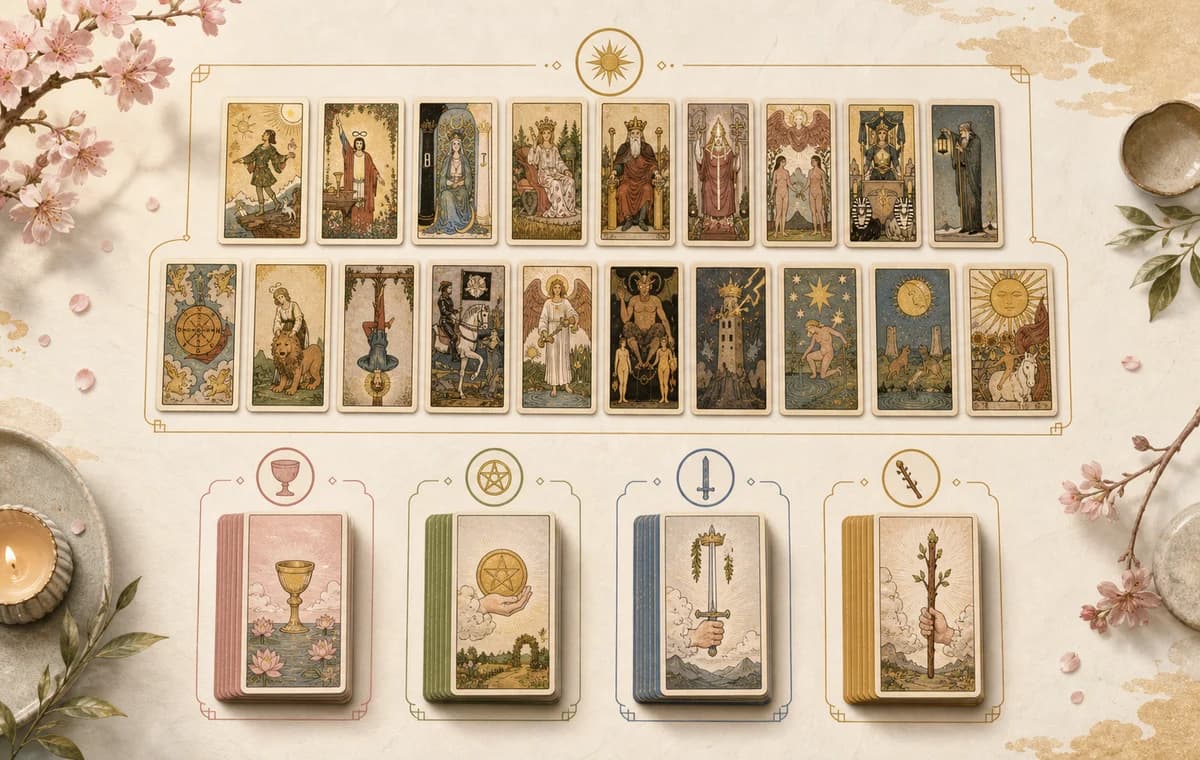
A complete tarot deck contains 78 cards divided into two main sections:
The Major Arcana: 22 cards numbered from 0 (The Fool) to 21 (The World). These represent life's major themes and spiritual lessons—the kind of life themes you'd write a memoir about, not a diary entry.
The Minor Arcana: 56 cards divided into four suits, each tied to one of the four classical elements:
- Wands (Fire): Passion, creativity, ambition, and action
- Cups (Water): Emotions, relationships, intuition, and the heart
- Swords (Air): Thoughts, communication, intellect, and truth
- Pentacles (Earth): Material matters, finances, career, and physical reality
Choosing Your First Tarot Deck
Recommended Decks for Beginners
Selecting the right deck is your first step into the tarot world. Three classic options stand out:
The Rider-Waite-Smith Deck: The gold standard for beginners. Every card features detailed imagery with clear symbolic meaning, and countless books, websites, and courses reference this deck specifically. If you're just starting out, this is your best bet.
The Marseille Tarot: A traditional European style with centuries of history. The Minor Arcana cards show only suit symbols without illustrated scenes, requiring more imagination and intuition to interpret. Better once you've already got the basics down.
The Thoth Tarot: Designed by renowned occultist Aleister Crowley, this deck incorporates deep Kabbalistic and astrological symbolism. Its complexity makes it worth waiting on until you've got a year or two of practice.
What to Consider When Buying
Size matters: Tarot decks come in mini, standard, and large formats. Mini decks are portable but harder to read; standard size (roughly 2.75 x 4.75 inches) offers the best balance of visibility and shuffling ease; large decks show beautiful detail but can be awkward to handle. Start with standard.
Back design: Symmetrical backs prevent you from knowing a card's orientation before flipping it, keeping readings more objective. Asymmetrical backs reveal whether a card is upright or reversed from behind. Beginners often prefer symmetrical designs to avoid unconscious bias.
Guidebook included: Make sure your deck comes with an interpretive guide. Many imported decks only include instructions in their original language, so verify you'll have accessible reference material.
Trust your gut: Choose a deck that genuinely appeals to you. Tarot reading relies heavily on intuition, and if a deck doesn't feel right in your hands, you won't reach for it — and that's the real reason this matters.
Essential Tips for Tarot Beginners
Tip 1: Patience Is Your Greatest Asset
This cannot be stressed enough. Give yourself several months to learn—there are no shortcuts despite what social media might suggest. Tarot is a tool that reveals its depth over time, not a skill you can master in a weekend.
Don't try to memorize all 78 cards at once. As you progress, you'll discover that card meanings continue to unfold in new ways. Building a relationship with your deck requires consistent practice, and this process itself is part of the learning.
Tip 2: Start with the Major Arcana
Rather than tackling all 78 cards immediately, focus on the 22 Major Arcana first. They're fewer in number, represent life's primary themes, and are easier to grasp conceptually. Once you're comfortable with these, you can perform basic readings while building toward the Minor Arcana.
Spend two to four weeks studying the Major Arcana exclusively. Understand each card's core meaning, practice simple readings using only these cards, then gradually introduce the four suits of the Minor Arcana.
Tip 3: Ask Better Questions
The quality of your question directly impacts the depth of your reading. Before drawing cards, get clear on what you're actually asking.
Strong questions typically start with "what" or "how," focus on aspects within your control, and seek guidance rather than fixed predictions. For example: "What should I focus on to improve my work situation over the next three months?" or "What do I need to weigh before making this decision?"
Avoid yes/no questions like "Does he love me?"—they limit insight. Skip overly specific timing questions and vague queries without clear direction.
Tip 4: Trust Your Intuition
This is the most crucial skill in tarot reading. While learning card meanings matters, don't get stuck memorizing keywords. Tarot isn't algebra—your first instinct when viewing a card is often the most accurate.
During readings, notice how cards make you feel: warm or cold, light or heavy, open or constrained. These physical and emotional responses carry important information.
To develop intuition: draw a daily card and interpret it before consulting any book; observe colors, symbols, and facial expressions closely; ask yourself what the card reminds you of; record your intuitive impressions, then verify against traditional meanings.
When shuffling and drawing, fan the cards out and let your hand drift over them. Stop shuffling when something tells you to. When a card calls to you, trust that pull.
Tip 5: Understanding Upright and Reversed Cards
Tarot cards can appear in two orientations: upright (image facing correctly) or reversed (image upside down).
Upright cards usually show energy moving freely — the theme of the card expressing itself outwardly, in a recognizable form. Reversed positions often suggest blocked or excessive energy, internalized expression, areas needing attention, or delays and challenges.
Important: reversed doesn't mean "bad"—the same energy is just showing up differently (stuck, inward, exaggerated, or delayed). As a beginner, consider reading only upright cards initially to master basic meanings — you can skip reversals for the first few months and lose nothing. After a month or two, begin incorporating reversals. Many professional readers choose not to use reversals at all, and that's perfectly valid.
Tip 6: Choose Appropriate Spreads
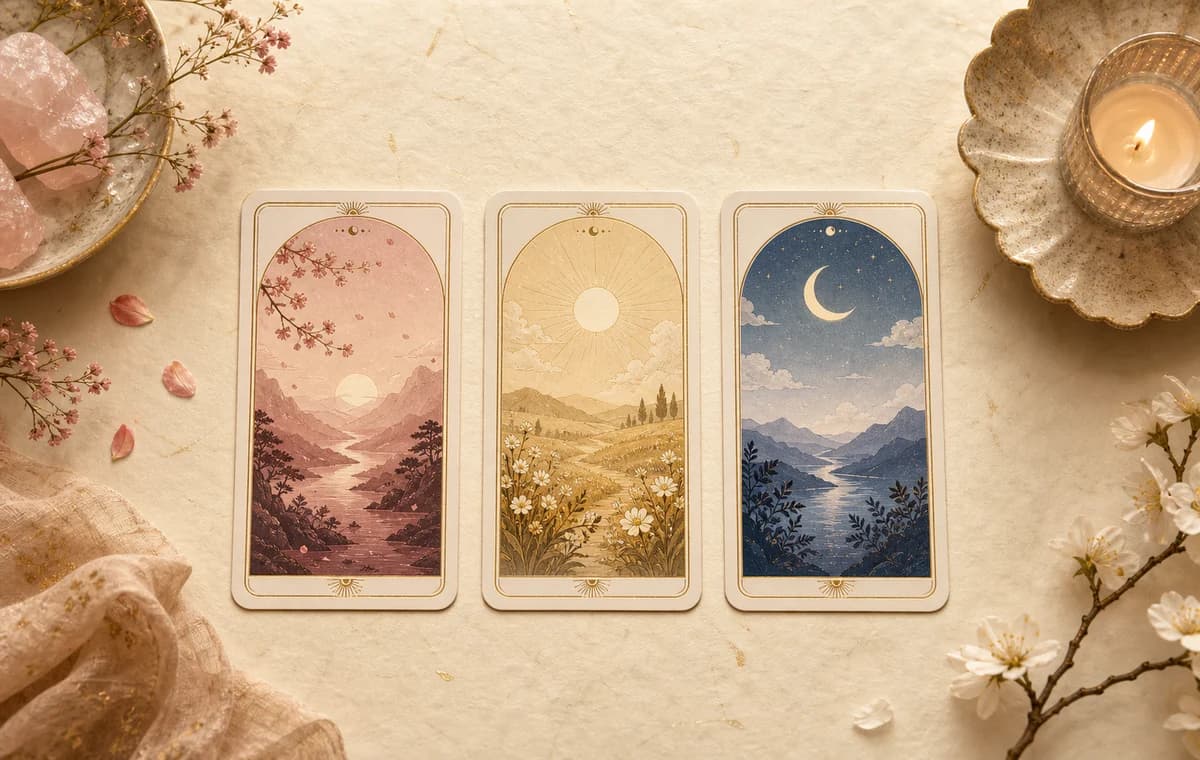
A spread is the pattern in which you lay out cards, with each position carrying specific meaning.
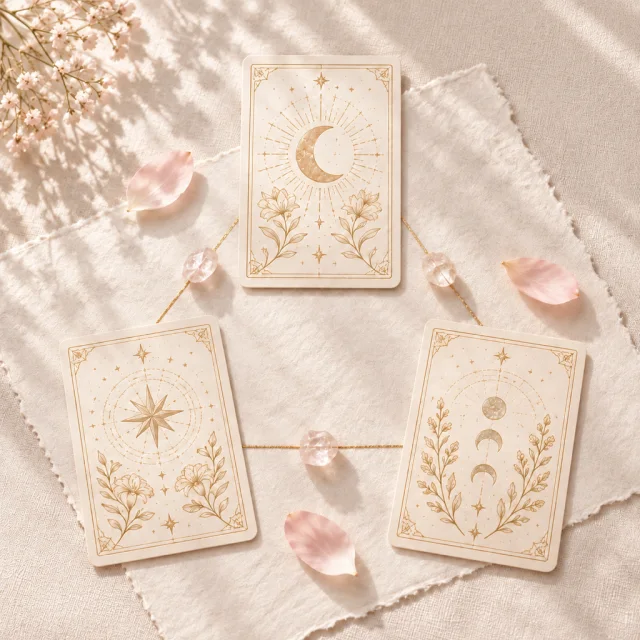
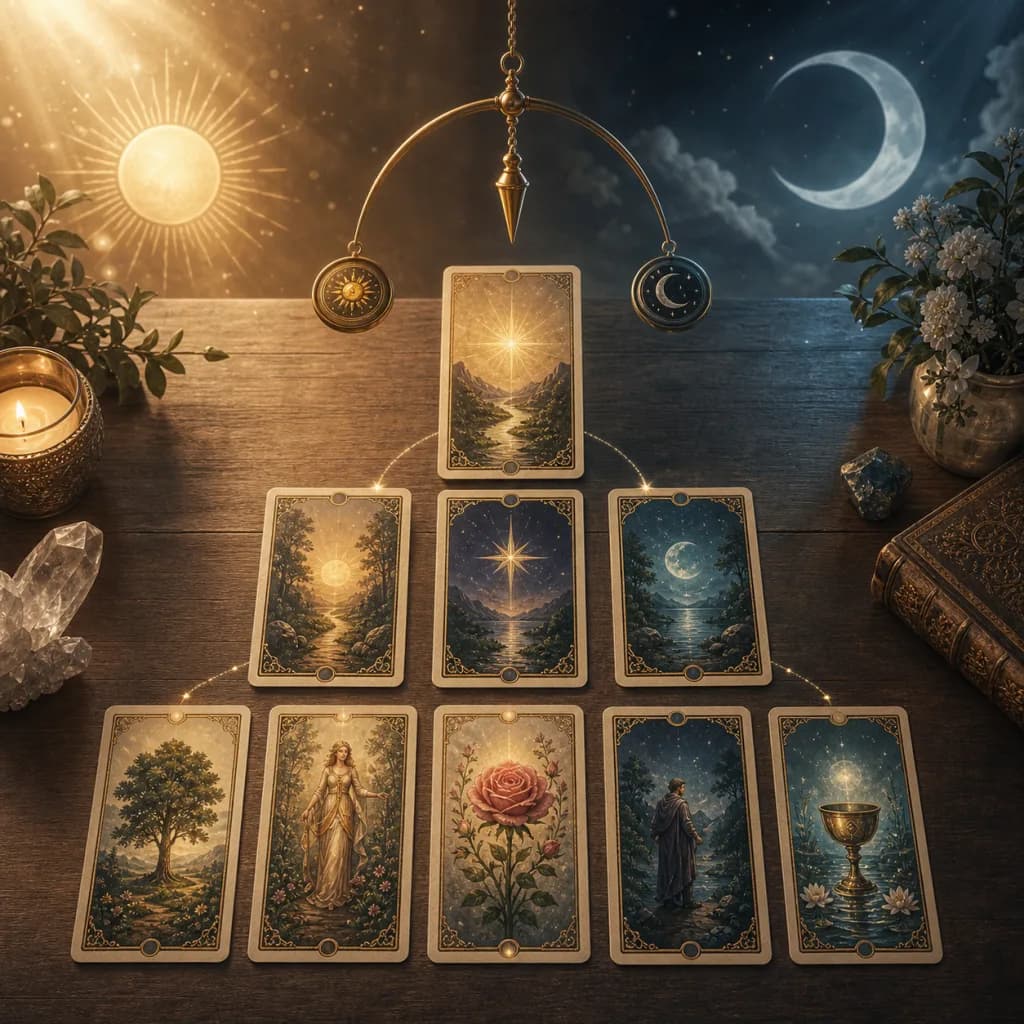
For beginners, start simple. Single card draws are perfect for daily practice—ask for the day's theme or guidance. If you don't have a deck yet, you can start with One Card Tarot: draw a single card online and read its message. Three-card spreads are versatile and practical, commonly representing past-present-future, situation-action-outcome, or mind-heart-action — start with the three-card past-present-future spread and you'll have a layout you can reuse for almost any question.
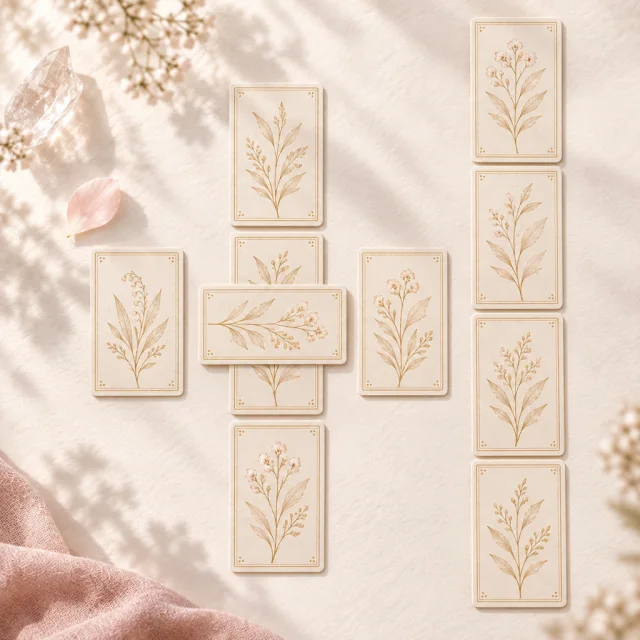
The Celtic Cross is the classic complex spread with 10 positions for deep analysis. Wait until you have at least three months of practice before attempting it.
The principle: progress from simple to complex. Master basic spreads before adding complexity. Feel free to create your own spreads as needed—more cards don't necessarily mean more accuracy.
Tip 7: Caring for Your Deck
Proper care extends your deck's life and maintains good reading conditions.
For daily care: keep hands clean to avoid soiling cards; shuffle gently without excessive force; return cards to their box or bag after use; avoid using cards around food and drinks.
For storage: use a dedicated tarot bag, preferably silk or velvet; store in a cool, dry place away from direct sunlight and humidity; consider a special drawer or box.
Traditional wisdom suggests not letting others casually handle your cards, as readers build energetic connections with their decks. When reading for others, they may shuffle or draw, but don't let people play with your cards carelessly.
Getting Started with Practice
The Daily Card Practice
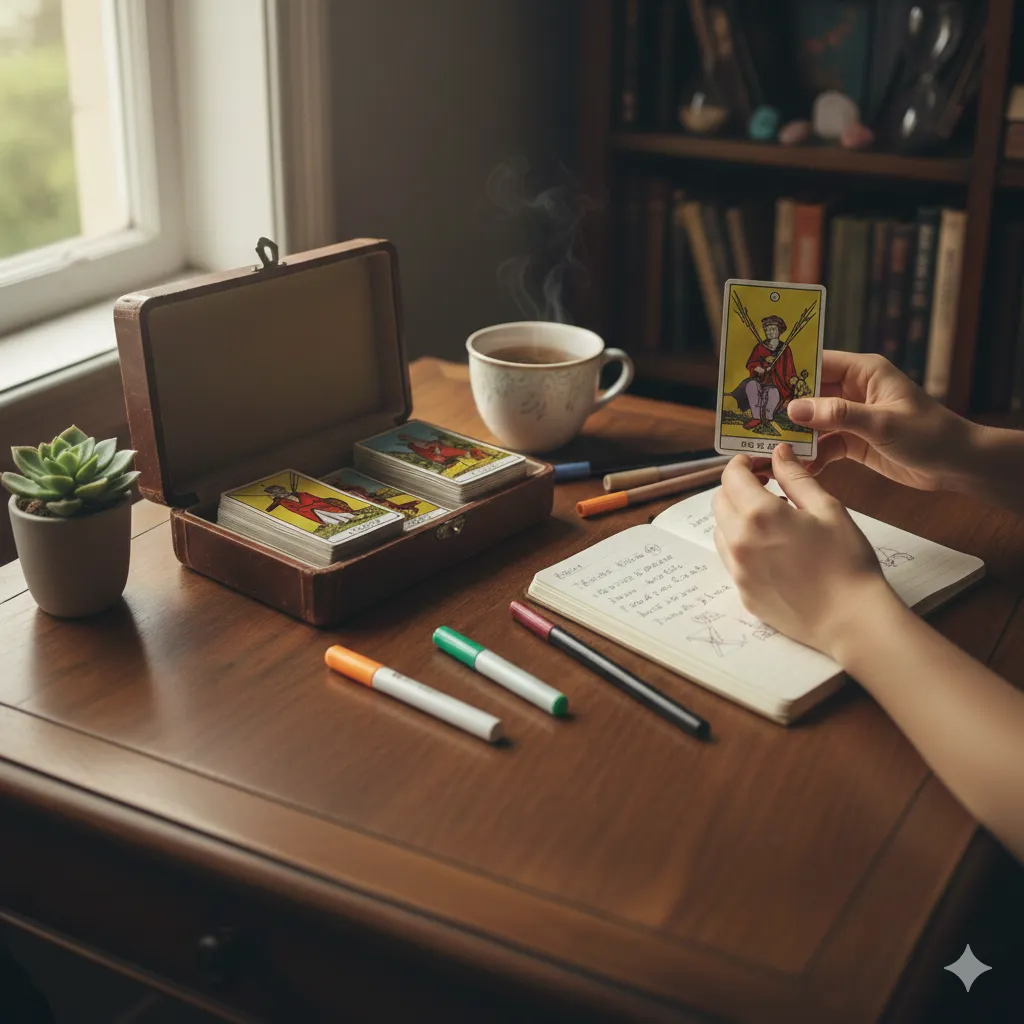
This is the most effective learning method — build a daily one-card practice to learn the deck and the meanings start to stick faster than any book can teach them. Each morning, shuffle and draw one card, asking what theme or guidance the day holds. Observe and feel the card intuitively before consulting any references. Record your first impressions. In the evening, reflect on how the card's meaning actually played out during your day.
Keep a tarot journal documenting the date, card drawn, initial impressions, and evening reflections. This record helps you track progress and understand how cards express themselves in different contexts.
Reading for Yourself
Self-reading offers the advantage of unlimited practice, you know what's actually going on in your life, and you can see fast whether the reading lands. The challenge lies in potential subjective bias, over-interpretation, and compromised objectivity during emotional moments.
Read for yourself when emotionally calm, treating tarot as a self-reflection tool rather than prophecy. If you're too invested in a particular outcome, consider seeking another reader's perspective.
Reading for Friends
Wait until you've practiced for two to three months and feel confident with basic meanings before reading for others. Don't charge during your learning phase; clearly state you're still studying; avoid absolute predictions or advice. Exercise extra caution with health or legal matters, and respect privacy by not sharing reading content.
Common Misconceptions Debunked
Myth 1: Tarot brings bad luck
Tarot cards are simply tools—they carry no inherent good or evil. They won't curse you or alter your fate. Think of tarot as a mirror helping you see your current situation and gain insight. Even challenging cards contain growth opportunities.
Myth 2: You need special psychic gifts
Anyone can learn tarot. No supernatural abilities required. Intuition can be developed through practice—patience and consistency are what matter.
Myth 3: Tarot predicts a fixed future
Tarot reveals possibilities and tendencies, not predetermined outcomes. The future shifts with your choices. Tarot provides insight to help you make better decisions—think of the cards as a map, not a verdict.
Myth 4: Repeated readings give better answers
Drawing again because you didn't like the first result is a major mistake. Repeated readings create confusion and energetic chaos, rendering results meaningless. Wait at least one to two weeks before asking the same question again — this is one of the tarot taboos every beginner should know.
Myth 5: Your first deck must be a gift
This is pure superstition. Buying your own deck is completely fine—choosing one you love matters more. Many professional readers purchased their first deck themselves.
Myth 6: Tarot should be your only guide
Tarot is one reference tool among many. Don't follow it blindly. Final judgments and decisions should always be your own. Tarot offers another perspective and direction for thought.
Moving Beyond the Basics
Once you've established foundational knowledge and several months of practice, consider these advanced directions:
Study each Minor Arcana card in depth, understanding the feel of each suit and the personalities of the Court cards. Learn complex spreads like the Celtic Cross or Tree of Life. Explore tarot's connections to astrology, Kabbalah, and other esoteric systems. Experiment with different deck styles to expand your interpretive range.
Learning tarot isn't linear. You'll pick up a card you thought you knew and see something you missed for years. Stay curious and keep reading — that's the whole practice.
Frequently Asked Questions
Which tarot deck should a complete beginner buy first?
The Rider-Waite-Smith deck is the safest starting point. Almost every modern tarot book, course, and YouTube tutorial references its imagery, so you'll always find a second opinion on a card you're stuck on. Once you've spent a few months with it, you can branch out into Marseille, Thoth, or any indie deck that catches your eye.
Is it okay to read tarot for myself as a beginner?
Yes, and it's actually one of the best ways to learn. Self-readings let you cross-check the cards against real events in your own life, which is how the meanings start to stick. Just read when you're calm rather than during an emotional spike.
How long does it take to get good at tarot?
Most people feel comfortable doing simple readings after three to six months of near-daily practice. Confidence with the full 78-card deck and more complex spreads usually takes a year or more. Tarot rewards consistency, not cramming.
Do I need to memorize all 78 cards before reading?
No. Start with the 22 Major Arcana, get comfortable with their core themes, then add the Minor Arcana one suit at a time. Many readers work from a guidebook for the first year, and that's completely normal.
Is it true my first deck has to be a gift?
It's a myth. The "must be gifted" rule isn't part of any historical tarot tradition; it likely came from a 20th-century magazine article. Pick a deck whose artwork genuinely speaks to you. That personal pull matters more than how it arrived in your hands.
Does tarot predict a fixed future?
Tarot shows the current energy and the likely direction things are heading if nothing changes. Choices you make after the reading can shift that trajectory. Think of it as weather forecasting for your inner life, not a script you're locked into.
Final Thoughts
The key points for tarot beginners include: choosing a deck that resonates with you, starting with the Major Arcana, developing intuition rather than rote memorization, allowing yourself adequate learning time, beginning with simple spreads, caring for your deck properly, and maintaining a healthy mindset without over-reliance.
Following these principles, anyone can start reading. The cards show you a lot, but the direction of your life is still yours.