A confession: a lot of professional tarot readers quietly dislike yes-or-no readings. They'll tell you tarot is "a mirror, not a magic 8-ball" and steer you toward a five-card spread instead. They're half right. The yes/no tarot spread has a real failure mode — but it also has a place, and the trick is knowing which one you're in before you shuffle.
This guide covers the three working layouts (1-card, 3-card, 5-card), the honest version of which cards mean yes (the lists you'll see online disagree more than they admit), the question framings that wreck accuracy, and the specific decisions where yes/no is the wrong tool no matter how cleanly you pull.
Quick answer
A yes-or-no tarot spread answers a single closed question by reading one or more cards through three filters: card tone (bright/heavy), card motion (forward/blocked), and position weight (the final card carries the verdict). A single card gives you speed, three cards give you a timeline, five cards give you a majority vote. Yes/no fails when the question is fuzzy, when you re-pull, or when the real answer depends on a choice you haven't made yet.
No deck at hand? The free Yes or No Tarot tool lets you type your question, pull one card, and see the verdict — yes, no, or it depends — with the card's reason, instantly.
Table of contents
- When yes/no actually works (and when it doesn't)
- Framing the question
- Method 1 — Single card
- Method 2 — Three-card timeline
- Method 3 — Five-card majority
- The honest list of yes/no/maybe cards
- Why you re-pull (and how to stop)
- Using yes/no as a clarifier
- Building an accuracy journal
- FAQ
<a id="when-it-works"></a>
When yes/no actually works — and when it doesn't
The reason serious readers grimace at yes/no isn't snobbery. It's that the format gets misused for questions that aren't actually yes/no.
Yes/no works well for:
- External events with a tight window: "Will I hear back from the recruiter at Company X this week?"
- Binary logistics: "Is this apartment going to fall through?"
- Sanity checks on something already decided: "Is moving in October the right month?"
- Clarifier pulls inside a bigger spread (covered below)
Yes/no fails for:
- "Does he love me?" — the real question is what you should do about how you feel, and a closed answer doesn't move you
- "Will I be happy?" — too abstract; happy at what, by when, measured how?
- "Should I quit my job?" — depends on choices you haven't made; the cards have nothing to land on
- Anything about a third person's inner state you can't verify
The pattern: yes/no works when the world will give you a clean answer in finite time, so you can check the deck against reality later. It fails when the "answer" is really a decision waiting to be made.
I tell clients in Tokyo that the deck doesn't read minds — it reads dynamics. Yes/no is fine for dynamics with an obvious shape. It's terrible for excavation work.
<a id="framing"></a>
Framing the question

Most "bad" yes/no readings come from bad questions, not bad shuffles. Four rules:
- One question per pull. "Will I get the offer and will I like the team?" is two questions colliding. Split them.
- Add a timeframe. "…in the next 30 days," "…before the end of Q3." Without a window the reading can't be checked, and unchecked readings teach you nothing.
- Stay neutral in wording. "Will I succeed at this pitch?" works. "I'm probably going to bomb this pitch, right?" is a leading question and you'll often pull a leading answer.
- Be specific about the object. Not "Will things get better?" — better at what? Try "Will the conflict with my sister ease in the next month?"
If you can't pass these four filters, the question isn't yes/no-shaped yet. Use a three-card past/present/future or a five-card situation spread instead.
<a id="single-card"></a>
Method 1 — Single card (the fast read)
The most direct yes/no.
- Shuffle while focusing on the question
- Cut the deck once
- Draw the top card
- Read it through the yes/no/maybe lists below
The single-card pull is excellent for quick check-ins and clarifier pulls. It is not the best for high-stakes questions, because there's no context — a Tower can mean "no, this falls apart" or "yes, but it cracks open something else first," and one card alone can't tell you which.
Use this for low-stakes daily questions. For anything that actually matters, move to the three- or five-card.
<a id="three-card"></a>
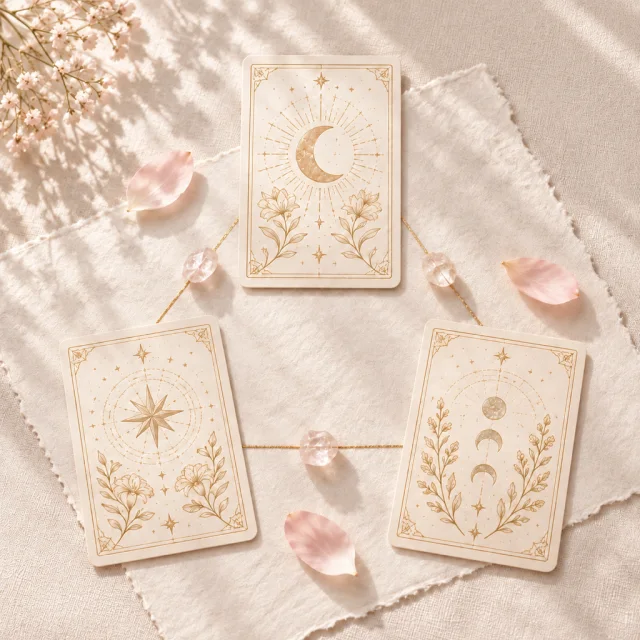
Method 2 — Three-card timeline (the recommended default)

This is the version I use most often when a client genuinely wants a yes/no.
[Card 1]       [Card 2]       [Card 3]
 Past/          Present         Likely
 Context        Energy          Outcome
- Card 1 — the situation you're walking into (factors already in play)
- Card 2 — what's actively happening now around the question
- Card 3 — the trajectory if nothing changes
Reading the verdict:
- If 2 or more cards lean yes → yes, with the nuance described by which one is "no"
- If 2 or more lean no → no
- If Card 3 strongly contradicts Cards 1-2 → the situation is shifting; the answer changes mid-window
- All three reversed → either a hard no or a "not in this form" — re-read the question, you may be asking the wrong thing
Card 3 carries the most weight. A bright start (Card 1) and bright middle (Card 2) followed by a Ten of Swords in position 3 is not a yes. The outcome card is the one the question is actually asking about.
<a id="five-card"></a>
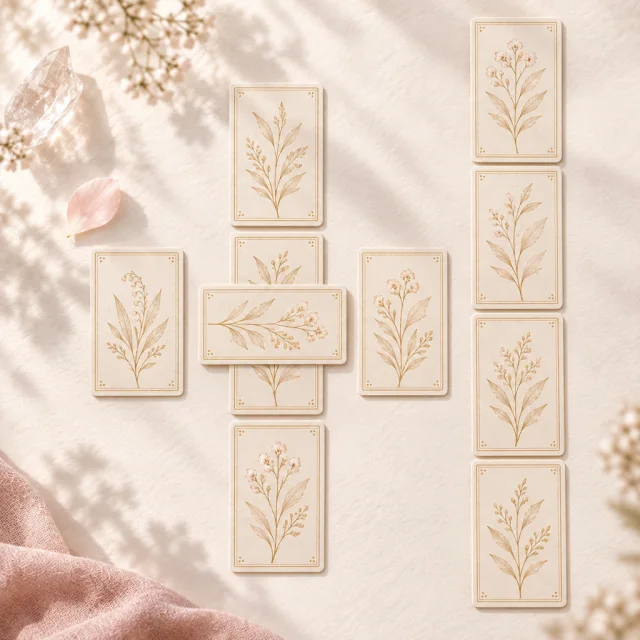
Method 3 — Five-card majority (for bigger calls)
When the decision actually matters — a job, a move, an offer with a deadline — three cards can feel thin. Five gives you a majority vote and two extra positions to argue against yourself.
       [Card 5]
        Wild card
[Card 1] [Card 2] [Card 3]
 Why yes? Reality   Why no?
       [Card 4]
        Advice
- Card 1 — the case for yes (what is true that supports the outcome you want)
- Card 2 — the current situation, neutrally
- Card 3 — the case for no (what is true that opposes it)
- Card 4 — what you should actually do
- Card 5 — the unknown variable — something you haven't accounted for
Reading the verdict: Count the lean of Cards 1, 2, 3, 5 (ignore Card 4 for tally — that's advice, not omen). Three or more yes-leaning = yes. Three or more no-leaning = no. A 2-2 split is a genuine "not decided yet" — and Card 4 becomes the most important card on the table.
The reason I like this spread is that the "case for yes" and "case for no" positions force you to actually look at each side instead of cherry-picking the cards that match what you hoped.
<a id="card-lists"></a>
The honest list of yes / no / maybe cards
Every yes/no guide online publishes a definitive list. They disagree with each other. Here's the actual landscape — the cards most readers agree on, the disputed ones, and why.
Clear yes (most traditions agree)
- The Sun, The Star, The World, The Lovers, The Empress
- Ace and Three of Cups
- Ace, Six, Nine, and Ten of Pentacles
- Ace and Six of Wands
- Page and Knight of Cups (depending on question)
These are bright, forward-moving, and arrive with their own momentum.
Clear no (most traditions agree)
- The Tower, The Devil, Death (in a binary question), Ten of Swords
- Five of Pentacles, Three of Swords, Nine of Swords
- Five and Seven of Cups (disappointment / illusion)
- Five of Swords (conflict outcomes)
Heavy cards, blocked energy, or outcomes that arrive shaped wrong.
Genuinely disputed
These are the cards I see people fight about online, and the answer is "it depends on the question":
- Strength — some lists say yes (you'll have what it takes), others say wait (the test isn't over). Read it as conditional yes: yes, if you do the work.
- The Wheel of Fortune — yes/maybe. Means the answer is moving. If you're asking about an external event, it's leaning yes. If you're asking about a stable state, it's "not yet."
- The Hanged Man — almost always "wait" rather than yes or no. The answer hasn't formed.
- Justice — yes if your case is sound, no if it isn't. The card refuses to flatter.
- Judgement — almost always yes (calling, awakening, decision honored), but slowly.
- The Moon — usually no, or "what you think you're asking isn't the real question."
- Two of Swords — stalemate, ask again later.
- Seven of Swords — usually no, with a warning that the situation involves deception.
If a card from this list lands as your verdict, don't paper over the ambiguity by re-pulling. The ambiguity is the answer.
Court cards
Court cards in a yes/no reading usually mean a person is the answer — someone will be involved in whether this happens. Whether that leans yes or no depends on the court's element (Cups/Wands tend yes, Swords tends no, Pentacles is neutral) and whether they're upright.
<a id="repulling"></a>
Why you re-pull (and how to stop)
The single most damaging habit in yes/no tarot: pulling again because you didn't like the answer.
It feels harmless. The shuffle was sloppy, you weren't focused, the cat jumped on the deck. There's always a reason to do it once more. The problem is that re-pulling teaches your nervous system that the deck is a slot machine — keep pulling until something pleasant comes up. After a few weeks of this, you stop being able to read your own cards at all, because you've trained yourself not to trust the first answer. It's one of the oldest cautions in the practice — asking the same question over and over backfires, and most reading traditions treat it as a genuine taboo, not just bad form.
Why people re-pull (be honest with yourself):
- The card was a no and you wanted a yes
- The card was ambiguous and you wanted certainty
- You're using the deck as a coping ritual, not as a tool
How to stop:
- The first pull is the reading. Write it down before you do anything else.
- If the card is genuinely confusing, draw one clarifier — not a re-pull. A clarifier asks "tell me more about this card," not "give me a different answer."
- If you still want to re-ask, the rule is to wait until the situation has materially changed. New information from the world, not new feelings from you.
- If you catch yourself shuffling to re-pull, stop and write a journal entry instead. The thing you wanted to ask the deck is something you actually need to feel through.
I've watched this habit wreck more home practices than any single bad spread. Decide in advance whether you'll honor the first pull. If you won't, don't pretend you're reading — you're stalling.
<a id="clarifier"></a>
Using yes/no as a clarifier inside another spread
This is the use case that even yes/no skeptics tend to agree with.
In a longer spread — a Celtic Cross, a five-card relationship reading — you'll occasionally land on a card whose meaning is genuinely unclear in context. The Three of Swords in the "outcome" position, for example, could mean the relationship ends in pain, or that there's pain to walk through before the actual outcome.
A clarifier pull turns this into a yes/no:
"Is this pain the final state of the relationship?"
Draw one card. Read it as yes or no. You've now disambiguated the original card without re-doing the whole spread.
Clarifiers should be used sparingly — once per reading max — or they spiral into the same re-pull problem. The discipline is to ask one closed question that resolves a specific ambiguity, not to keep prying for the answer you want.
<a id="journal"></a>
Building an accuracy journal
The way to actually get good at yes/no tarot is to track your hits and misses. Most readers never do this, which is why most readers can't tell you whether their yes/no readings are any better than a coin flip.
A simple format:
| Date | Question | Pull | Verdict (Y/N) | Window | Outcome | Hit/Miss |
|---|---|---|---|---|---|---|
| 2026-05-14 | Will I hear back from X by Friday? | The Sun | Yes | 7 days | Got call Thursday | Hit |
| 2026-05-15 | Will rent come through this month? | Tower + 3 of Swords | No | 30 days | Fell through | Hit |
After 30-50 entries, you'll see your real accuracy rate. Two things tend to happen:
- You'll discover you're better at certain question types than others — usually external/logistical beats internal/emotional
- You'll spot the question phrasings that consistently produce wrong reads, and you'll stop using them
This is also how you learn which "disputed" cards lean yes or no for you, in your deck and reading style. Lists online are an average. Your own log is the truth.
<a id="faq"></a>
Frequently Asked Questions
How accurate is a yes or no tarot reading?
For well-framed, time-bound, external questions, experienced readers report accuracy well above chance — but nobody honest claims 100%. Tarot reads probabilities and dynamics, not certainties. If you find yourself reading a site that promises "100% accurate," close the tab. Your own accuracy will improve dramatically once you keep a journal and start framing better questions.
Can I ask the same yes/no question twice?
Not on the same day, and not before the situation has materially changed. Re-asking trains you to ignore the first answer, which destroys your trust in the deck over time. If something concrete shifts — new information, a new offer, a changed deadline — you can ask again about the new situation. Asking the same question because you didn't like the answer is the most common reason home readers lose their accuracy.
Which cards always mean yes?
There's no card that always means yes regardless of question and position. The closest are The Sun, The Star, The World, the Ace of Cups, and the Ten of Pentacles — bright, abundant cards with forward motion. Even these can mean "yes, but not in the way you expect" in certain positions. Read the card in context, not as a fixed verdict.
What if I get a reversed card?
Reversed cards in a yes/no reading lean toward no, delay, or "not in the form you're imagining." A reversed Sun isn't catastrophic — it's "the bright outcome is blocked or delayed." A reversed Tower can mean "the disaster you fear doesn't happen," which in a yes/no context might actually be a yes. Always read reversals in light of what the question was asking.
Is yes/no tarot real or just superstition?
Tarot is divination: the card you pull shows which way the situation is moving right now. In a yes/no pull, the card is answering "is this currently heading toward yes?" What it shows is the present current, not a verdict that locks the future in place — so when a conditional card comes up, read what would need to shift for it to lean yes. You can test it over time: log each answer in your journal and look back at how things actually turned out.
Should I shuffle a specific number of times?
No. Shuffle until you feel the deck is mixed — usually 5-7 riffle shuffles, or 30-60 seconds of overhand. The number doesn't matter; what matters is that you stop shuffling when you feel ready, not when you're avoiding the pull. If you find yourself shuffling for two minutes, you're not preparing — you're stalling.
Can I do a yes/no reading for someone else?
Yes, with the same rules. The most important addition: the person asking should be in the room or on the call with you, focused on their question. Yes/no readings done from a name and a photo are unreliable because the questioner's own focus is part of what shapes the read. If you must do a remote read, get the person to type their question themselves in their own words.
Closing
The yes/no spread has a bad reputation because it gets used badly — usually as an escape from a question that doesn't actually want a closed answer. Use it for what it's good at: external events with a window, sanity checks on decisions you've already made, and clarifier pulls inside bigger spreads.
Frame the question well, honor the first pull, keep a journal. Do those three things consistently and your yes/no readings will be more useful than any of the "100% accurate" widgets online.
If you want a spread that handles the actually-complicated questions, look at the three-card or Celtic Cross layouts — both are designed to hold the kind of nuance a yes/no can't.