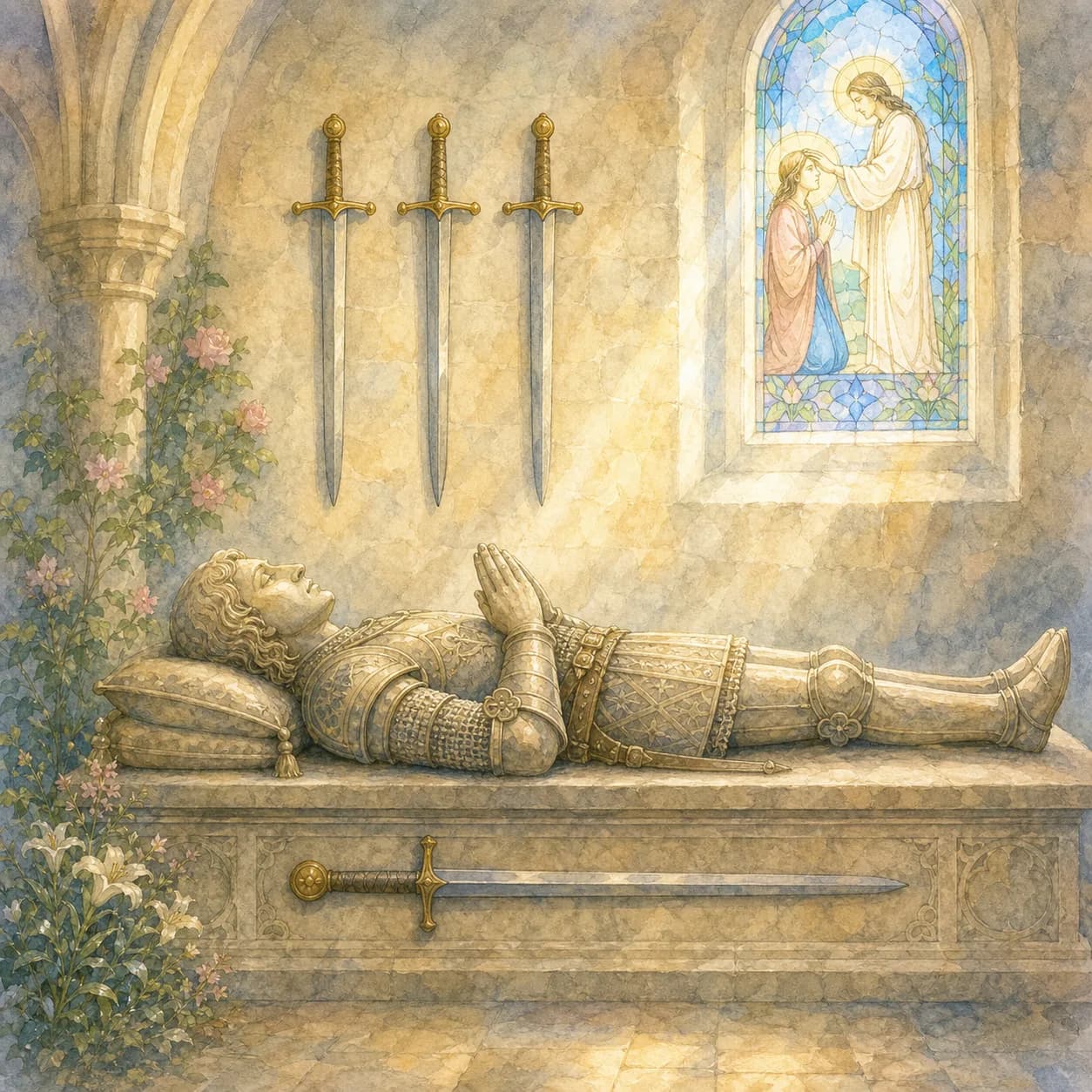
A client came to me last winter in my Tokyo studio, phone face-down on the table, three unanswered messages on it. She'd asked the cards how he felt, and turned over a knight lying still on a stone tomb. "So he's done with me," she said before I'd even spoken. I had to stop her right there. The Four of Swords as feelings is the most misread card in the suit precisely because the man on it isn't leaving — he's lying down to heal. The stillness people take for an ending is almost always a pause.
Quick Answer
Upright, the Four of Swords as feelings means someone who feels worn out and is withdrawing to rest and recover — usually after conflict, stress, or their own burnout — rather than someone who has stopped caring; the feeling is intact but dormant, and the silence is healing, not rejection. Reversed, it means they're slowly coming back to life and re-engaging, or, in the harder reading, that the rest has dragged into avoidance and they're using "I need space" to keep distance indefinitely.
Four of Swords Upright as Feelings
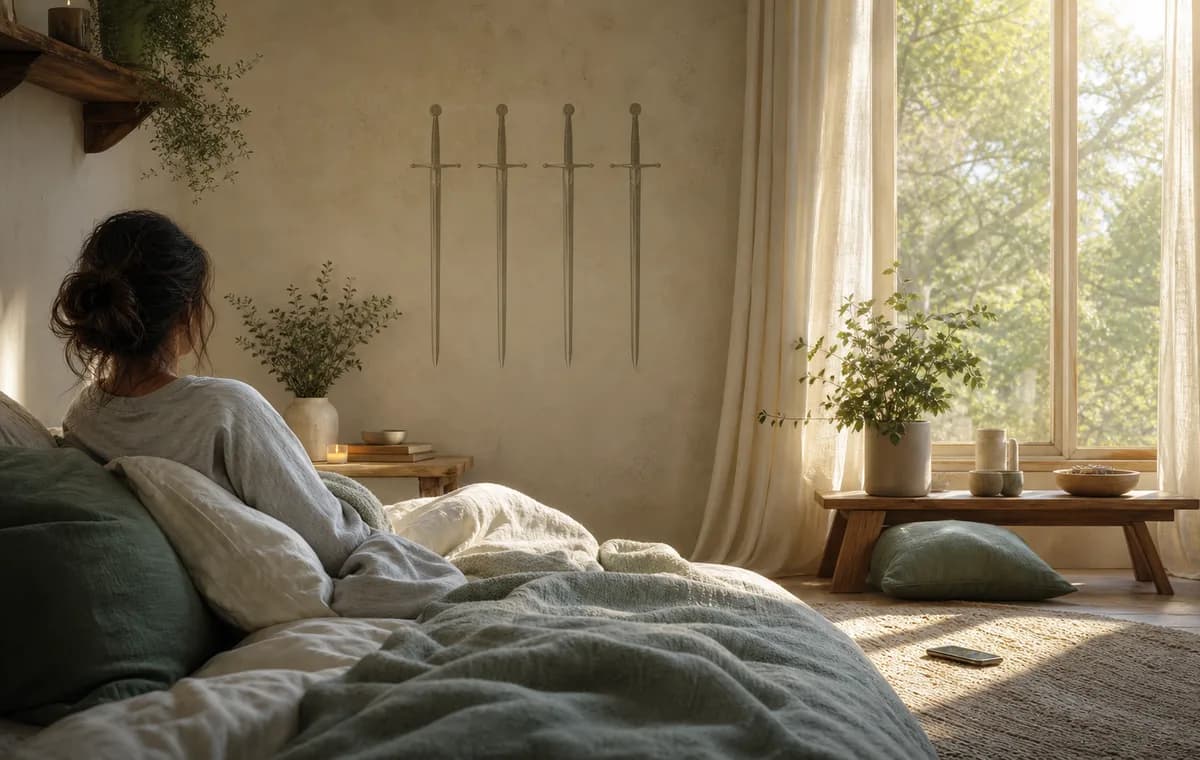
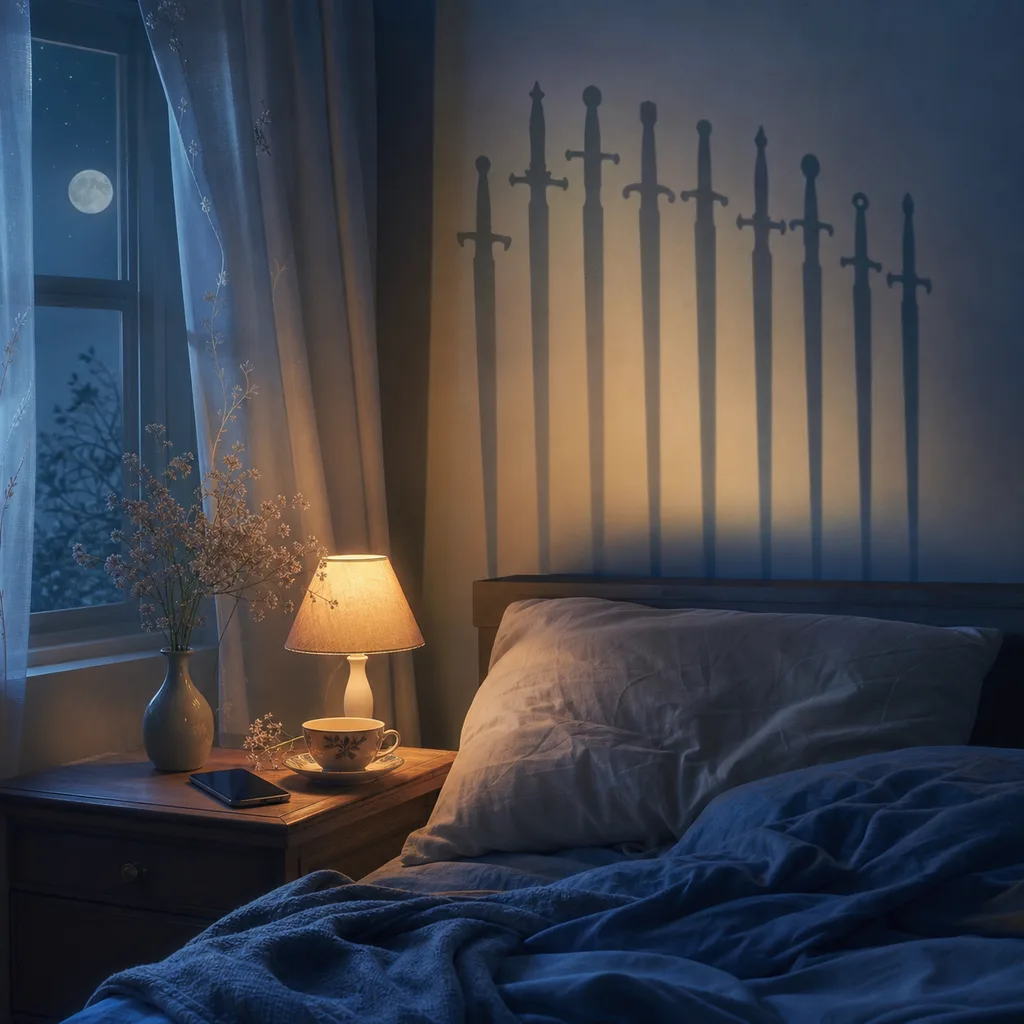
Look at the card. A figure lies flat, hands pressed in stillness, three swords on the wall above and one beneath — the conflict is over, set aside, not being fought right now. That is the whole emotional weather of this card: someone who has gone quiet not because the feeling died but because they have nothing left in the tank to express it with.
When the Four of Swords describes how a person feels, they care. They're just running on empty.
This is the part I most often have to slow clients down on. We're trained to read silence as the worst-case answer. But this card is recovery, not refusal. The feeling is sitting there, intact, waiting for the person to have the energy to pick it up again. Pushing on someone in this state — texting more, asking where things stand, demanding a conversation — is the single fastest way to make them retreat further. They need quiet, and quiet given freely tends to be repaid.
When you're single or it's new
In a new or potential connection, the upright Four of Swords is someone deliberating rather than diving in. They're attracted, but they're being careful with their own heart — weighing whether they're ready, protecting a peace they've worked to rebuild. This is thoughtful interest, not lukewarm interest. If they've recently come out of something painful, the card is even gentler than it looks: it means they like you enough to want to be at full strength before they let it begin.
Don't mistake their slowness for indifference. They're not playing it cool. They're genuinely tired, and they don't want to bring half of themselves to something that might matter.
In an established relationship
In a relationship that's already underway, the Four of Swords usually arrives after a rough patch. They've poured themselves in, you've had the hard conversations, and now they've hit a wall and pulled inward to recover. This is normal. It is not the relationship ending; it's the relationship catching its breath.
The work for you is counterintuitive: do less. Clinginess and suspicion read, to someone in this state, as more demand on an already-empty account. Give the rest room and they tend to come back steadier than they left.
Four of Swords Reversed as Feelings

Before anything else: reversed here is not the doom card. Most of the time it's actually the more forward-moving of the two positions.
Reversed, the Four of Swords as feelings usually means the rest is ending. They've recharged, they're stirring, and the feeling that went dormant is waking up — for couples this often reads as renewed warmth, fresh energy toward you, someone re-entering the relationship with something to give again.
But there's a second reading I won't hide from you, because with this card it's real. Reversed can mean the rest has overstayed. The withdrawal that started as healing has calcified into avoidance — restlessness, stagnation, or someone who has discovered that "I just need space right now" is a comfortable place to live and has quietly decided to stay there. The tell is time: a pause has a natural end; a pause that keeps renewing its own lease isn't a pause anymore.
From a crush
Reversed from a crush, more often than not, means thawing — they took their time, they sorted themselves out, and the interest is surfacing. They may be about to make a move they weren't ready for before. Less often, it points to someone perpetually "not in the right place," where the timing is always wrong and somehow always will be. Watch whether the re-emergence actually arrives or just keeps getting promised.
From an ex, or during no contact
This is where I see the most needless heartbreak, so let me be plain. In a no-contact stretch, the upright Four of Swords is genuinely reassuring: it shows an ex who is resting, not erasing you — feelings intact but set down while they recover from how it ended. Silence in this position is them healing, not them moving on. Reversed, it usually means they're beginning to surface and may reach out; the harder version is that they've grown so used to the distance that the rest has become the new normal. Either way, the feeling on this card rarely points to "they stopped caring." It points to "they had nothing left to give and lay down."
How Do You Know If the Rest Will End — Or If It's Just How They Leave?

This is the question every other guide skips, and it's the only one that actually keeps people up at night. Everyone tells you the Four of Swords is "a pause, not an ending, silence is healing." Lovely — and true. But it leaves you with no way to tell a genuine recovery from someone who has simply found a polite, open-ended way to disappear. Both look identical from the outside: quiet, withdrawn, "needs space."
Here's how I read the difference after years of watching it play out.
Recovery has a direction. Real rest is oriented toward something — the person is gathering themselves to come back, and you can usually feel a low hum of intention underneath the quiet: a "later," a "when I'm okay," a door left unlocked even if it's shut. Avoidance has no direction. The rest doesn't point anywhere; it just continues, and every time you check, the answer is the same flavor of "not yet" with no nearer horizon than last month.
So don't measure how withdrawn they are. Measure whether the withdrawal is moving. Ask the cards a follow-up: pull a card for "where is this rest heading?" A card of motion or return (the Eight of Wands, the Six of Swords, the Star) says the pause is real and temporary. Another card of stasis or retreat says you may be looking at a lifestyle, not a phase. And in your own life, watch the calendar more than the words. A person who is recovering eventually does something — a message, a softening, a small step toward you. A person who is using the rest to leave does the same thing forever: nothing, restfully. Steady recovery flows back toward you. A pause that never spends itself isn't resting. It's already gone, lying down.
Four of Swords vs Eight of Cups as Feelings
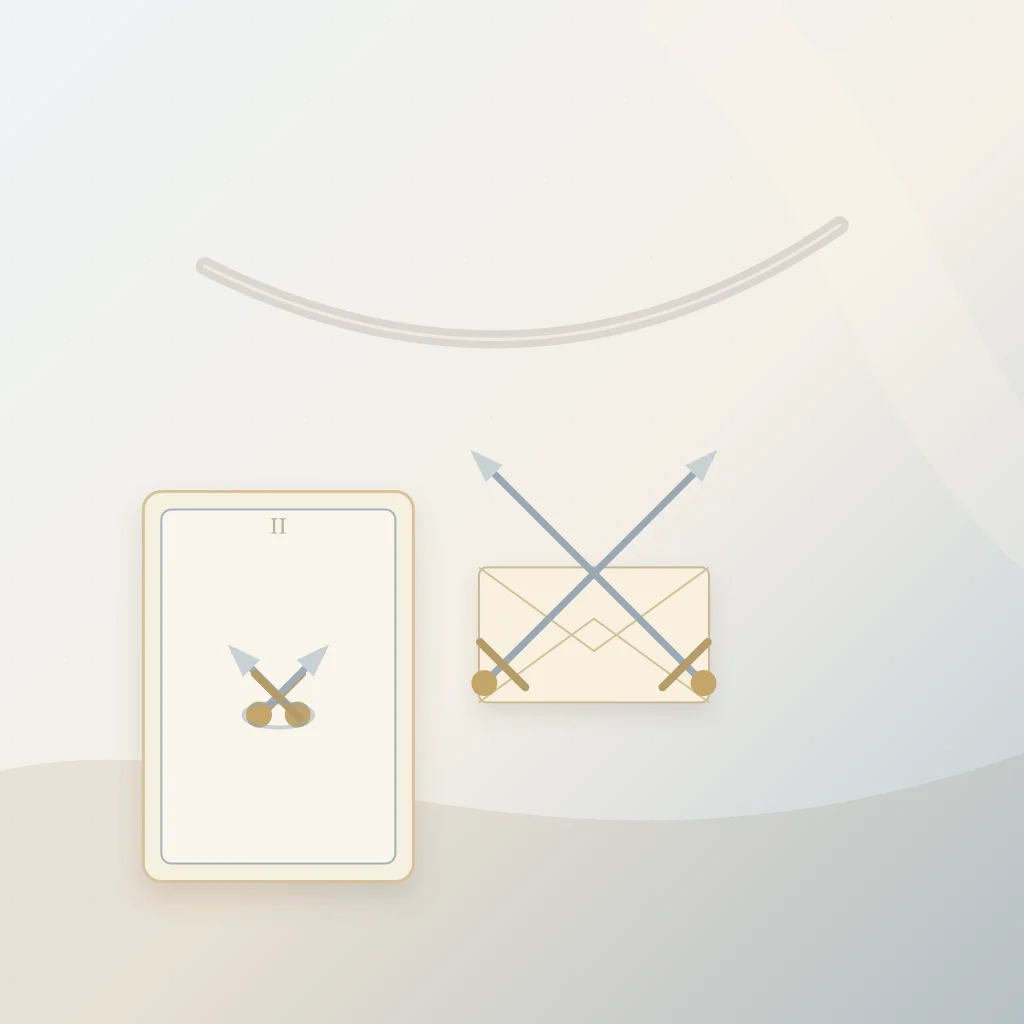
These two get confused because both describe someone stepping back — but the body language is opposite, and that's the whole answer. The Four of Swords lies down. The figure stays, horizontal, recovering in place; the leaving never happens. The Eight of Cups stands up and walks away — feelings that were real but are being consciously left behind for something the person needs more. If you're trying to read whether someone is resting or actually departing, this is the cleanest contrast in the deck: Four of Swords is "I'm staying put until I can face this again"; Eight of Cups is "I cared, and I'm going." When you can't tell which you're holding, the difference between the two is the difference between waiting well and waiting in vain. Within the suit itself, keep this card apart from two neighbors people muddle it with: the Two of Swords as feelings is a deliberate stillness — a held breath while they avoid a choice, not a depleted collapse — and the Nine of Swords as feelings is the mind at war at 3 a.m., the opposite of the quiet the Four finally lays down into.
How the Japanese Tarot Tradition Reads This
In Japanese タロット占い, the Four of Swords is often read through 「英気を養う」(eiki o yashinau) — to nourish your vital energy, to restore yourself before the next effort. It's not idleness; it's the deliberate, almost disciplined refilling of a well that's run dry. A teacher of mine used to say this card is 「休むのも仕事のうち」— resting is part of the work, too. I find that frames the feeling far more kindly than the English habit of treating withdrawal as a problem. When this card shows how someone feels, they aren't neglecting you. In the older reading, they're doing the quiet, necessary labor of becoming someone who can show up — and that labor, done properly, is for you as much as for them.
Frequently Asked Questions
Does the Four of Swords as feelings mean they love me?
It doesn't deny the feeling — it describes a feeling that's resting. Upright, it points to someone who cares but is too depleted to act on it right now, often after stress or conflict. The love isn't gone; it's set down while they recover. Read this card as "intact but dormant," not as "absent."
Does the reversed Four of Swords mean they don't care?
Usually the opposite — reversed most often means they're recharged and re-engaging, with the dormant feeling waking back up. The one caution is when the rest has dragged into avoidance, where "I need space" has quietly become permanent. The difference is whether the re-emergence actually arrives or just keeps getting deferred.
What does the Four of Swords say about my crush?
Upright, it's thoughtful, deliberate interest from someone protecting their own heart — careful, not cold, and often slow because they want to be ready. Reversed, it usually means they're thawing and may finally make a move. Don't push; this card rewards patience and punishes pressure.
Will an ex come back if I draw the Four of Swords?
It's one of the more hopeful cards to draw during no contact. It typically shows an ex who is resting rather than erasing you — feelings set down, not deleted. That's not a guarantee of return, but the silence here usually means healing, not rejection. Reversed, they may be starting to surface.
Is the Four of Swords a yes for love questions?
It's a "not yet" more than a no. Upright it points to someone who needs rest and time before they can move forward, so as an answer it's a pause with the feeling still present. Reversed it leans more toward yes, as the energy returns — unless the rest has become a way of avoiding the question entirely.
Closing
If you drew the Four of Swords for how someone feels, put the phone down — literally. The most powerful thing you can do with this card is stop reaching and let the rest finish itself. Pull one more card next week and ask only this: is the pause moving? That single follow-up will tell you what the silence alone never can. Meet their quiet with your own steadiness, and give recovery the one thing it needs, which is room.
Want to tell resting apart from leaving? Compare the Eight of Cups as feelings for what genuine departure looks like, see the King of Swords as feelings for the clear-headed side of this suit, or plan a full reading with our love tarot spread guide.