A client in Ginza once described the man she was reading about as "weirdly fair." He never raised his voice, never blamed her, laid out exactly why he thought they should slow down — and she'd walked away from the conversation feeling respected and quietly devastated at the same time. She couldn't tell whether she'd just been let down gently or set up for something serious. She drew the King of Swords. That card is the reason for the confusion: the King of Swords as feelings delivers everything in the same even, reasonable tone, whether the answer is yes or no. The work isn't reading his mood. It's reading his ruling.
Quick Answer
King of Swords as feelings means a composed, mind-led attachment: someone whose care shows up as honesty, fairness, clear communication and respect rather than open passion. Upright, his feelings are clear and stated — he knows where he stands and will tell you plainly, but the warmth runs under the words, not on top of them. Reversed turns that clarity cold: detachment, harsh judgment, cutting words, or a man who has talked himself out of his own heart. The catch most readings miss: his calm is a verdict, and a verdict can land for you or against you in exactly the same voice.
King of Swords Upright as Feelings

Look at the card: a king seated straight, sword held upright in his right hand, gaze level and direct. He doesn't lean. He doesn't reach. Air, ruled by the intellectual end of the zodiac, he sits with everything already thought through. When he stands in for someone's feelings, the feeling has already been processed before you ever see it. He's reasoned his way to it, he can defend it, and he'll state it without decorating it.
His attraction is built on respect and the meeting of minds. He's drawn to how you think, how you hold an argument, whether you tell the truth. The love language is integrity: he shows care by being fair, by keeping his word, by treating you justly even when it would be easier not to. He is, genuinely, one of the safer cards to draw about someone's intentions — there's no game here, no manipulation, no hot-cold whiplash.
Here's the part nobody examining the card stops to ask. That upright sword isn't only a symbol of clarity. It's the sword of a judge. And a judge can rule either way. Hold that thought; it's the whole second half of this reading.
When you're single or it's new
Direct and a little formal. He won't flood you with messages or grand romance; he'll show interest by engaging your mind, asking real questions, and being unusually straightforward about what he wants. If he likes you, you tend to know — he says so, in plain words, often sooner than you expect. The early warmth is quiet but it is not ambiguous.
In an established relationship
Steady, loyal, principled. He's the partner who handles the hard conversation instead of avoiding it, who keeps agreements, who defends you on principle. The long-term risk isn't disloyalty — it's that he can mistake being fair for being close, running the relationship like a well-argued case while the tenderness goes unspoken because, to him, it was settled long ago and doesn't need restating.
King of Swords Reversed as Feelings
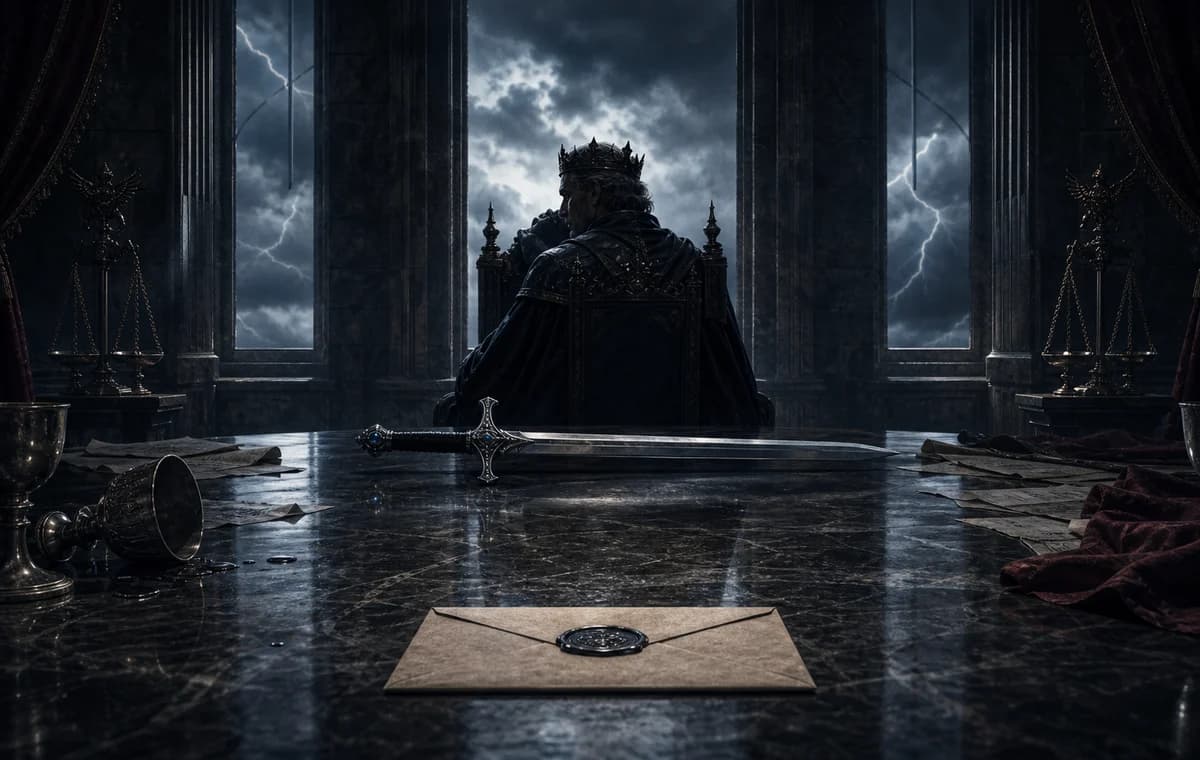
Reversed, the clarity curdles. The same intellect that read as honesty now reads as cold: detachment, dismissiveness, a tendency to argue you down or use the truth as a weapon rather than a gift. At the harsher end it's controlling, judgmental, or quietly contemptuous — the man who has decided he's the smartest person in the room and treats your feelings as a flaw in your logic.
But the more common reversed King isn't a tyrant. He's a man who has overthought his own heart into silence. He may genuinely feel something and have argued himself out of acting on it — too cautious, too defended, too convinced that feeling deeply is a loss of control. The detachment is real, but underneath it is often fear, not absence.
From a crush
Cool, hard to read, frustratingly rational. He keeps things at arm's length, intellectualizes the connection, maybe critiques more than he warms. The interest can be real, but he's guarding it behind so much analysis that even he isn't sure what he feels. Don't expect him to volunteer it.
From an ex during no contact
Composed on the surface, unresolved underneath. The reversed King during no contact often means someone who has filed the relationship under "concluded" intellectually but hasn't actually felt his way through it. He won't reach out on impulse; if he comes back, it'll be reasoned and deliberate. If you're trying to read whether that closed door is truly closed, a will my ex come back tarot spread separates a genuine reopening from a man who's simply too proud to revisit his own ruling.
Calm Because He's Sure of You — or Calm Because He's Already Ruled?
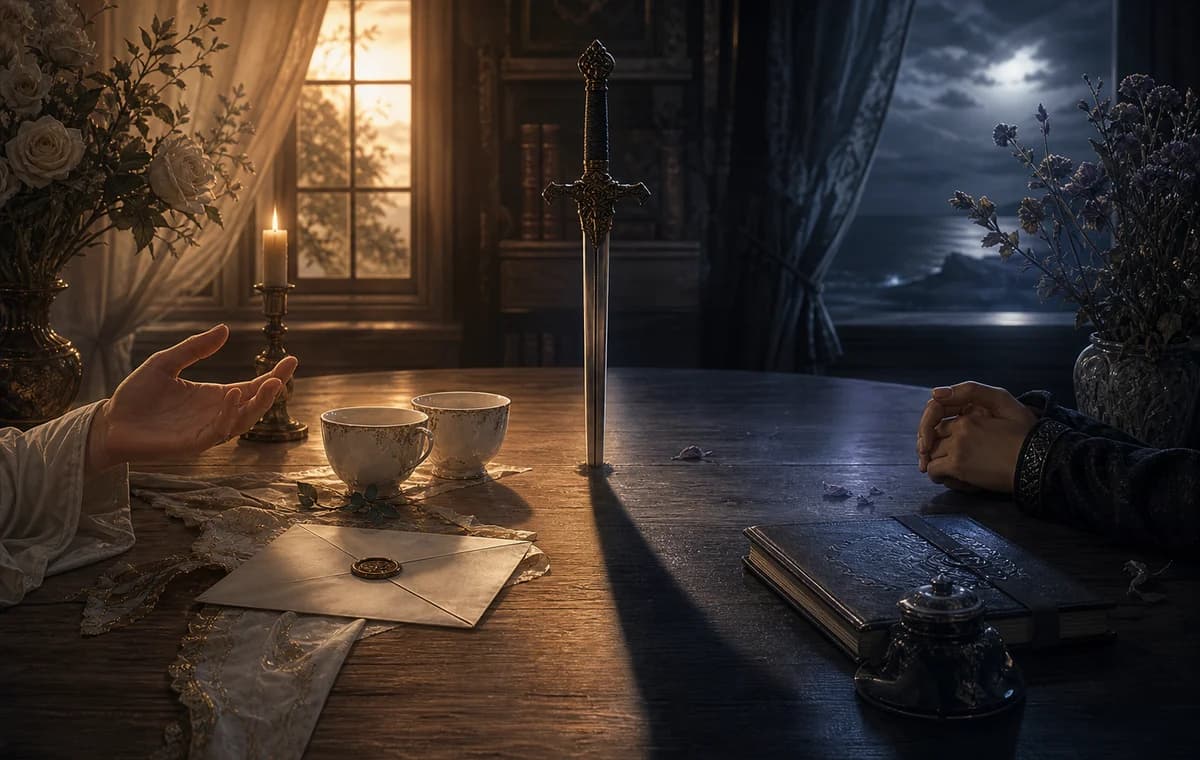
Every guide tells you the King of Swords is positive: respectful, honest, mature. That's true, and it's also the trap. Because this card delivers a no in precisely the same calm, fair, articulate tone it delivers a yes. He doesn't get cold when he's not interested. He stays warm, reasonable, and kind — and rules against you anyway. The gentlest letdown you will ever receive comes from this man, and it can leave you feeling cared-for and rejected in the same breath. That's not cruelty. To him, treating you fairly is the affection, even when the verdict isn't the one you wanted.
So the real question with an upright King isn't "does he respect me" — he almost certainly does. It's which way the ruling went. Here is the tell I teach clients, and it has held up across years of readings:
- Tense. A verdict for you lives in the future tense. He talks about plans, next steps, where this goes — respect pointed forward. A verdict against stays in the present and the abstract: he admires you, values you, thinks highly of you, all in a strangely closed, complete way. Praise with no future tense is often a polite ruling.
- Specifics vs. summary. For you, he names particulars — what he likes, what he wants to build, the actual mechanics of moving closer. Against you, the warmth goes general: "you're great, you deserve someone wonderful." Generalities are how a fair man closes a door without slamming it.
- Direction of the truth. When he hands you a hard truth and leaves a door open — here's the problem, here's what would need to change, and he's still here — that's investment. When the hard truth is an exit line delivered kindly, it's the closing argument.
A man in Nakameguro I read for last year couldn't understand why his "completely amicable, super respectful" talk with someone had ended things. There was nothing to grieve, he kept saying — she'd been so reasonable. That reasonableness was the ending. The King of Swords had ruled, and ruled kindly. Calm is not the answer. Calm is just the medium the answer arrives in.
King of Swords vs King of Cups as Feelings
These are the two mature, composed men of the deck, and people mix them up constantly because from the outside they look identical: both calm, both controlled, both sparing with words. The difference is what the stillness is made of. The King of Swords thinks clearly and tells you the truth — his composure is a conclusion. The King of Cups as feelings feels deeply and stays steady so the feeling doesn't spill — his composure is a container.
It changes how you read their silence. When the King of Swords goes quiet, he's drafting — choosing the precise words, and what arrives will be a clear sentence. When the King of Cups goes quiet, he's holding — managing a feeling too big to say cleanly, and what arrives, if anything, will be a gesture. Swords hands you a ruling. Cups hands you a still, full cup. If you're torn between two people who each read as "calm and grown-up," ask which one explains and which one absorbs.
How the Japanese Tarot Tradition Reads This Card
In Japanese タロット占い, I read the upright King of Swords through 「筋を通す」(suji o tōsu) — to keep things consistent, to do right by principle even when it costs you. It captures his love language better than the English word "fair" does. His care isn't warm in the way Cups is warm; it's the care of someone who will not contradict himself, will not say one thing and do another, will hold a line because holding it is the honest thing. For a certain kind of person, that consistency feels safer than any sweet word.
The shadow side has its own phrase: 理屈っぽい (rikutsuppoi) — overly logical, argumentative, the person who answers a feeling with a counterargument. That's the reversed King exactly. As a teacher of mine put it, suji o tōsu builds trust, but pushed too far it forgets that a relationship is not a case to be won. Read the upright King as principled love; read the reversed as principle that has crowded the heart out of its own room.
Frequently Asked Questions
What does the King of Swords mean as feelings?
Composed, mind-led attachment expressed through honesty, fairness, respect, and clear communication rather than open passion. Upright, he knows how he feels and will tell you plainly — the warmth sits under the words. Reversed, the clarity turns cold: detachment, harsh judgment, or a man who has overthought himself out of his own heart. The detail most guides skip is that his calm tone carries his answer whether it's yes or no.
Is the King of Swords a yes or no for love?
It's a conditional yes that depends entirely on his ruling, not his mood. Upright, the feelings are clear and usually positive — respect, loyalty, honest intent — but the card describes how he feels, not automatically that the answer is yes. Read the tense and the specifics: future-tense plans and concrete particulars mean yes; warm but closed, general praise often means a kind no. Reversed leans toward no, or toward a feeling he's blocked behind logic.
Does the King of Swords mean he likes me?
Usually yes, and with respect rather than infatuation. He's drawn to your mind, your honesty, the way you hold a conversation, and he'll signal it through directness rather than romance. The nuance: he can respect and admire you and still rule that the relationship shouldn't move forward — and he'll say both in the same even voice. Liking you and choosing you are separate verdicts with this card.
What does the King of Swords reversed mean as someone's feelings?
Reversed, it points to emotional detachment, cold or cutting communication, harsh judgment, or controlling behavior at the harsh end. More often it's subtler: a man who feels something but has argued himself out of expressing it, guarding the connection behind so much analysis that even he can't name it. The interest may be real; the block is fear of losing control, mistaking vulnerability for weakness.
Does the King of Swords think about me?
Yes, but analytically rather than longingly. When this card describes someone's thoughts, you're on his mind as a considered judgment — he's weighed the connection, reached conclusions, and holds a clear position on you. It's less daydreaming, more deliberation. If you want to know what the conclusion was, watch for future-tense talk and specific plans; that's where his thinking shows its verdict.
How does the King of Swords feel about an ex?
Composed and intellectually "done," but not always emotionally resolved. He tends to file a past relationship under a reasoned conclusion and hold the line out of principle or pride, even if feeling lingers underneath. He won't return on impulse; any reopening will be deliberate and reasoned. Pair the card with a will-my-ex spread to tell a genuine reconsideration from a man too committed to his own ruling to revisit it.
Closing
When you draw the King of Swords about how someone feels, don't ask whether he respects you — assume he does. Ask which way the verdict went, and read it in the tense, not the tone. Future plans and specifics mean the door is open; warm, general, closed praise is a kind goodbye. The kindest no in the deck wears the same calm face as the clearest yes, and learning to tell them apart is the whole skill this card asks of you. For the upright and reversed reading behind this feelings angle, see the full King of Swords tarot card meaning.
To lay out a fuller reading around someone this composed, our love tarot spread guide gives you the positions to test intent against action, and for the other cool-headed court cards in this suit, the Queen of Swords as feelings and the Page of Swords as feelings round out how Air expresses love through the mind. For the recovering, clear-headed side of the suit, see the Four of Swords as feelings.