A client in my Shinjuku studio once put it perfectly. "He never says anything," she told me, fanning herself in the summer heat, "but he reorganized my whole moving day, drove the van himself, and never mentioned it again." She'd pulled The Emperor asking how he felt, seen "authority, structure, control," and assumed it meant he was cold. After more than a decade reading the Rider-Waite-Smith deck in Tokyo, I've learned that The Emperor as feelings is one of the most misread cards there is — because this man's love almost never sounds like love. It looks like a built thing.
Here's what The Emperor as feelings actually means, upright and reversed, including what it says about a crush and an ex — plus the one question this card forces you to answer: is the structure he's building for you, or a wall between you?
Quick Answer
Upright, The Emperor as feelings points to serious, stable, protective love — someone who feels committed and responsible toward you and shows it by providing, planning, and protecting rather than by saying it. It's steady, long-term, marriage-and-family energy, not a casual spark. Reversed, that same authority curdles: feelings turn controlling, rigid, or domineering, or hide behind a wall of competence and emotional distance. Reversed rarely means no feeling — it means the structure has stopped serving the relationship and started serving his need for control.
The Emperor Upright as Feelings

When The Emperor describes how someone feels, don't look for warmth in the words. Look for it in the architecture. This is a person who, having decided you matter, sets about building something around you — a routine, a plan, a sense of being provided for and defended. The feeling is real and it is serious. It just expresses itself as responsibility rather than romance.
The defining quality here is commitment, not passion-on-display. The Emperor is a father-and-provider card; when he feels for you, he feels protective, and that protection has a take-charge edge. He wants to be the one who handles things, fixes things, makes sure you're safe. To someone raised on grand declarations, this can read as unromantic. I'd argue it's the opposite — it's love that's already thinking about next year.
Here's the part most readings skim. The Emperor's emotion runs underneath the competence, and he only shows it to people he deeply trusts. The composure isn't an absence of feeling. It's a man who feels strongly and processes it through doing, not through telling. The tenderness is in the gestures you might overlook because they don't announce themselves.
When you're single or it's new
For something new, the upright Emperor is a strong, serious signal. He doesn't do casual well, so if he's showing up consistently, planning real dates, making space for you in his structured life — that is the feeling. He sees you as significant and wants to move toward commitment. He may not say it for a while; with this card, what he does is the confession.
In an established relationship
For a couple already together, The Emperor marks devotion that has hardened into foundation — the partner who keeps the household running, defends you without being asked, and treats the relationship as something to protect and provide for. It often points toward deepening commitment, marriage, building a life. The work he does is how he says he loves you. The one thing to watch is space: even loving Emperor energy needs to leave room for you to lead sometimes.
The Emperor Reversed as Feelings

Reversed, the structure stops protecting and starts confining. The most common reading is control: feelings expressed as needing to dominate, dictate, or keep the upper hand — love that has tipped into rigidity, jealousy, or a power struggle. The protectiveness that was a gift upright becomes possessiveness here.
There's a colder version I'll name directly, because with this card it appears: emotional unavailability behind a wall of authority. Reversed, The Emperor can describe someone who looks devoted — capable, responsible, in charge — but uses all that competence to stay untouchable. He provides so he never has to be vulnerable. The structure isn't a home he's inviting you into; it's a fortress he runs from inside, alone.
Most often, though, reversed is simply a man whose need for control has overrun his ability to be soft — feeling plenty, governing it badly.
From a crush
Reversed Emperor from a crush usually means feeling tangled up with control. He may like you but want it on his terms, on his timeline, with him steering — which can read as hot-and-cold or as pressure dressed up as taking charge. Less often it's the unavailable version: impressive, in command, and impossible to actually reach. Watch whether his "taking care of it" ever makes room for what you want. If every plan is his plan, the reversal is talking.
From an ex, or during no contact
Here the reversed Emperor often shows impulsiveness under all that order. It can describe an ex who's considering reaching out but second-guessing himself — wanting to get back together, then talking himself out of it, then texting at 1 a.m. anyway. The control he usually relies on has slipped. Upright in a no-contact stretch, the read is steadier: feelings that haven't gone anywhere, a man who still feels responsible for you even from a distance. Either way, with The Emperor, silence is rarely indifference — it's more often a man who doesn't know how to say the soft thing out loud.
Is the Structure Protection — or Control?
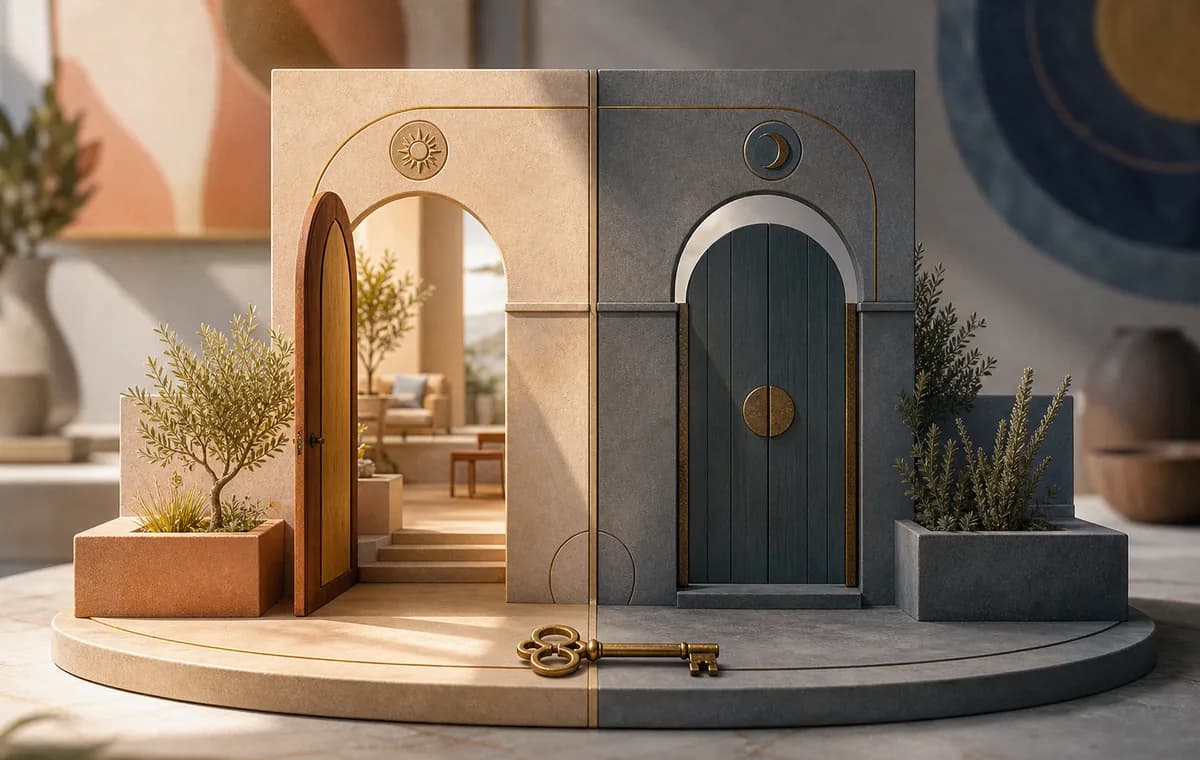
This is the question The Emperor actually puts to you, and almost no guide answers it — they treat upright as all good and reversed as all bad. But in real readings the line is thinner than that, because the behavior looks identical from the outside. Providing, planning, taking charge, handling everything — that exact same set of actions can be a man building a safe home around you, or a man building a cage and calling it care. So how do you tell?
Don't measure how much he does. Measure who it's for. Protection asks what you need and builds toward it — his structure has a door, and you hold a key; he provides and he listens; the plan flexes when your life changes. Control builds the same structure but locks it from his side — your preferences quietly stop mattering, "I'm taking care of it" becomes "I've decided," and any push for your own say gets read as a threat. The cleanest test I know: watch what happens when you disagree with him. Real Emperor love can be challenged and stay warm. Control-wearing-Emperor's-face gets cold, or punishes, the moment its authority is questioned. A protector wants you safe. A controller wants you managed. Both build. Only one leaves you free inside what's built.
The Emperor vs. The King of Pentacles as Feelings
These two get confused constantly, because both are providers and both show love through stability rather than speeches. The King of Pentacles as feelings is the steady, generous provider — his care is patient, sensual, grounded, built to last; he wants to make you comfortable. The Emperor is the commander — his care is protective, structured, take-charge; he wants to make you safe. The King of Pentacles builds you a comfortable life and relaxes into it. The Emperor builds you a fortified one and stands guard. Both are serious, both are loyal — but the King of Pentacles holds you, while The Emperor defends you. If your reading feels warmer and more at-ease, lean Pentacles; if it feels more dutiful and in-command, lean Emperor. The other authority card love-readers confuse with this one is the Hierophant — where the Emperor wants to protect you, the Hierophant as feelings wants to commit to you through shared tradition and the next right step.
How the Japanese Tarot Tradition Reads This
In Japanese tarot occult practice — タロット占い (taroto uranai) — The Emperor (皇帝, kōtei) is often read through 「甲斐性」(kaishō): a man's capacity to take responsibility, provide, and reliably carry the weight of those he's committed to. It's an old word, a little unfashionable now, and that's exactly why I reach for it. A teacher of mine described the upright Emperor in love as 甲斐性のある人 — a person you can lean your whole life against and trust the structure to hold. I find that catches what the English "controlling vs. providing" debate misses entirely. The point of the card isn't dominance; it's being load-bearing. When The Emperor describes someone's feelings, it's naming a man who has quietly decided to be the beam that holds up the roof you're both standing under. Reversed, that same beam becomes a man so attached to bearing the weight that he won't let you carry anything — or stand anywhere he hasn't built.
Frequently Asked Questions
Does The Emperor as feelings mean they love me?
Usually yes — but it's a love that shows up as commitment, protection, and providing rather than romantic words. He feels seriously and responsibly about you, often with long-term, marriage-minded intent. Don't read the lack of sweet talk as a lack of feeling; with this card, what he does is the declaration.
Does the reversed Emperor mean they don't care?
Rarely. Reversed more often means feeling that's curdled into control, rigidity, or a power struggle — or feeling hidden behind a wall of authority and competence. The warning sign isn't coldness; it's whether his "taking charge" leaves any room for what you want. If your say keeps disappearing, take the reversal seriously.
What does The Emperor say about my crush?
Upright, your crush takes you seriously and is moving toward you in a structured, deliberate way — consistency and real plans are the tell, not declarations. Reversed, the feeling is likely real but tangled with control or on-his-terms timing. Watch whether his plans ever bend around what you actually want.
Will an ex come back if I draw The Emperor?
Often it shows an ex who still feels responsible for and protective of you, which is a steadier sign than most. Reversed, it can mean impulsiveness — wanting to reconnect, then second-guessing, then reaching out anyway. It's not a guaranteed return, but the feeling has rarely simply vanished with this card.
Is The Emperor a yes for love questions?
Generally yes — a committed, stable, serious yes, especially for anything about building a lasting relationship. Reversed it softens to "yes, but watch the control," pointing to power struggles or emotional walls rather than an outright no.
Closing
If you drew The Emperor for how someone feels, stop waiting for him to say it and start reading what he builds. This is love that arrives as reliability, protection, and a plan with your name in it — quiet, serious, and built to last. The one thing worth checking is the door: a good Emperor builds you a home you can move freely inside; a reversed one builds a wall and calls it devotion. So this week, notice one structure he's put around you — and ask yourself whether it holds you up or holds you in.
Want this card beyond the feelings question? Read the full The Emperor meaning, compare the King of Cups as feelings for love that's contained rather than commanded, or plan a full reading with our love tarot spread guide.