A client came to me last winter, phone face-down on the table, certain a man had lost interest. He'd gone quiet for three weeks. She drew The Hermit. After more than a decade reading the Rider-Waite-Smith deck in Tokyo, I've watched that exact panic land on a hundred faces — and most of the time, the panic is reading the card backwards. The Hermit as feelings almost never means someone walking away from you. More often it means someone who has walked off alone to understand what he feels — and that is a very different silence.
Quick Answer
Upright, The Hermit as feelings means deep but private feeling — someone who cares quietly and has pulled inward to reflect, often needing solitude before they can commit. It is patience, not rejection. Reversed, the same withdrawal curdles into isolation, avoidance, or fear of intimacy — feeling that's real but hidden behind walls, sometimes showing up as hot-and-cold or going dark.
The Hermit Upright as Feelings
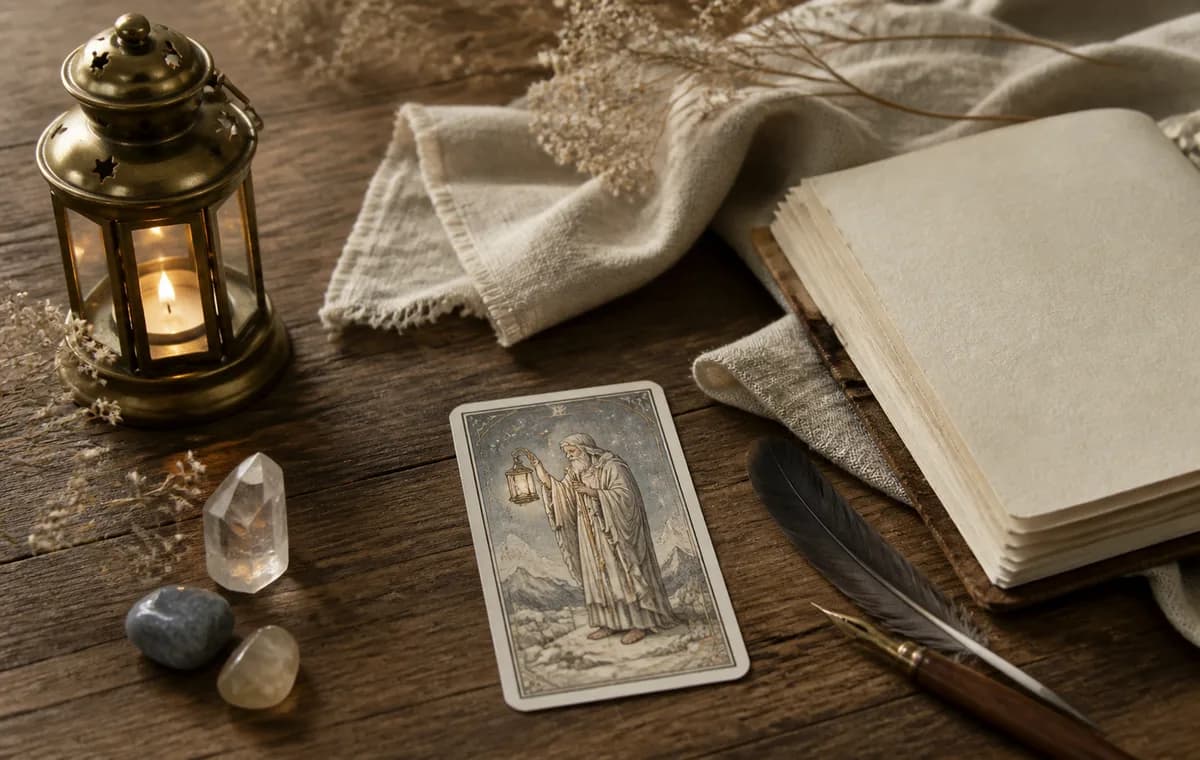
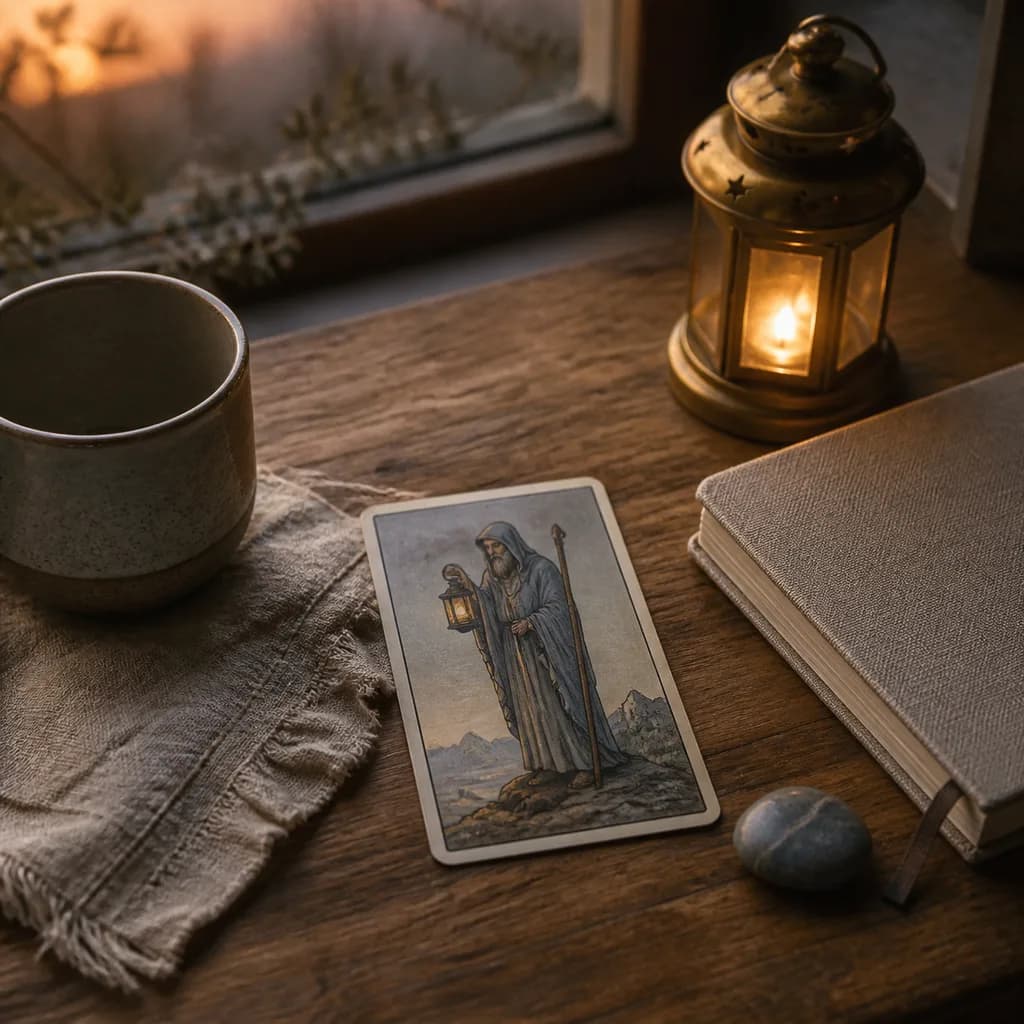
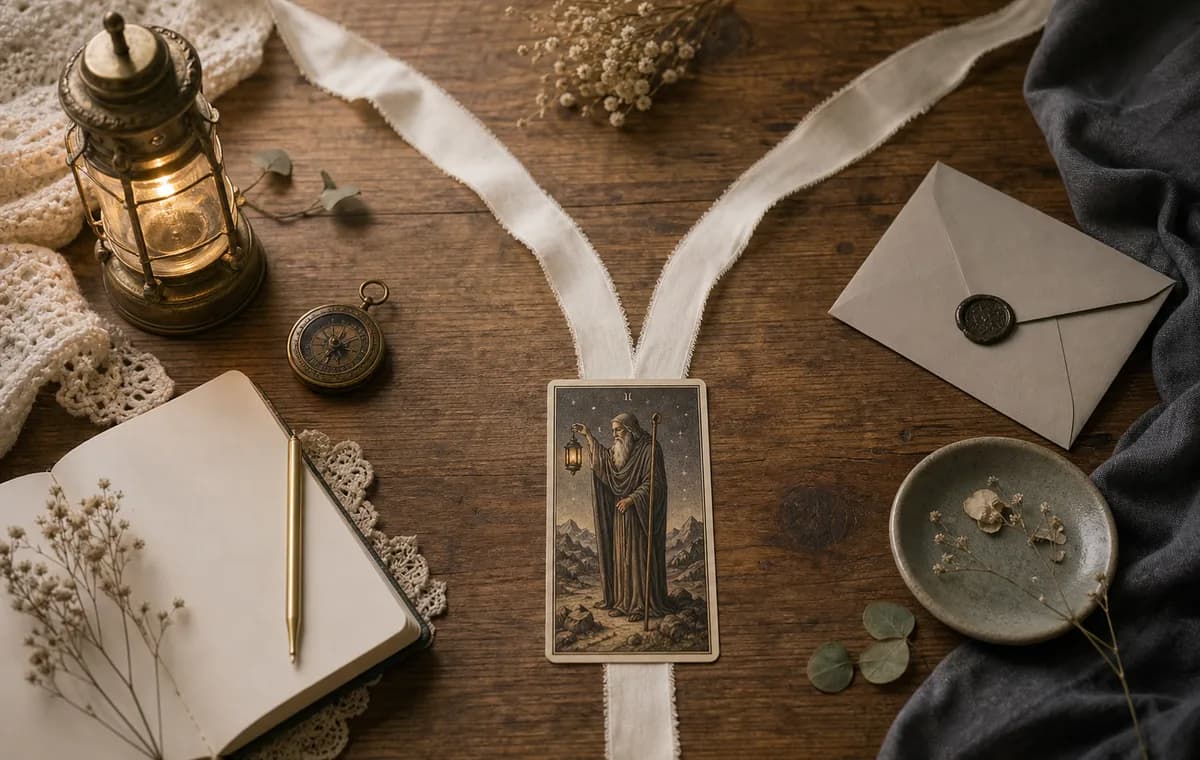
Picture the figure on the card: an old man on a mountain at night, holding up a single lantern. He isn't running from anyone. He climbed up there on purpose, to see something he couldn't see in the crowd.
That is the feeling The Hermit describes. Not the absence of emotion — its quiet, concentrated form. When this card represents how someone feels about you, they feel something genuine, but they're holding it close and turning it over in private. The warmth is there. The fanfare is not.
What trips people up is that The Hermit is not a passion card. There are no fireworks here, no declarations. So a reader expecting heat sees the stillness and assumes coldness. I'd gently push back on that. The Hermit feels in a slow, considered, almost careful way — and that carefulness usually means the feeling matters to them enough that they don't want to fumble it.
When you're single or it's new
Early on, the upright Hermit tends to mean someone who likes you but needs to be alone with that fact for a while. They may be fresh out of something, in a season of rebuilding, or simply the type who has to understand a feeling before they'll act on it. The interest is real; the timeline is theirs. Pushing for a definition too early is the surest way to make a Hermit retreat further up the mountain.
In an established relationship
For a couple already together, The Hermit rarely signals a problem with the love — it signals a need for space inside the love. Your partner may be doing some private soul-searching, pulling back to think, going inward to sort out something that isn't even about you. The feeling holds. What's changed is that they need room to hear themselves. Give it, and the Hermit usually comes back down the mountain with more clarity than they left with.
The Hermit Reversed as Feelings
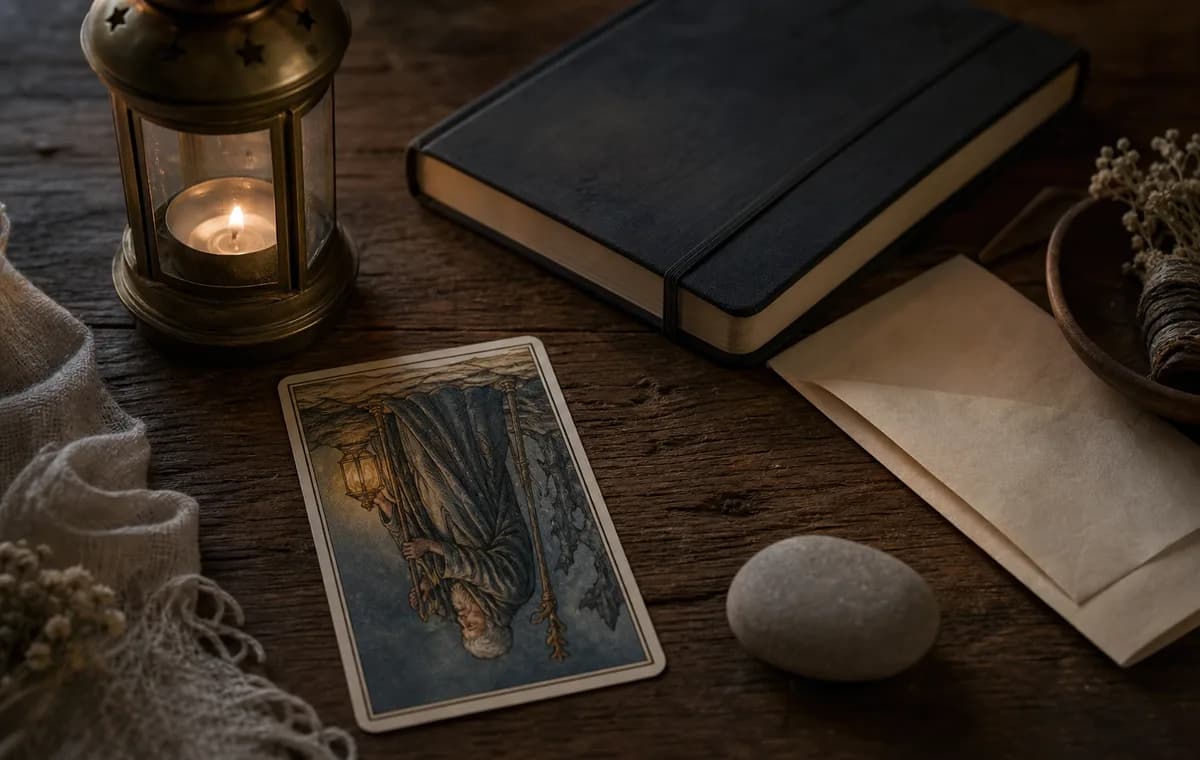
Reversed, the lantern goes out.
Before I read reversals as doom, I want to say plainly: reversed Hermit is not automatically "they don't care." But it does mark where healthy solitude tips into something harder. Now the withdrawal isn't reflection — it's avoidance. The same person who needed space to understand a feeling is now using space to escape it.
Reversed, this card can mean emotional isolation, a fear of intimacy, or feeling that's real but buried so deep under old wounds that it can't reach the surface. Loneliness that isn't chosen. In newer connections, it often shows up as the hot-and-cold pattern — they lean in, then vanish, not out of cruelty but because closeness frightens them and retreat is the reflex.
From a crush
A reversed Hermit from a crush usually means the feeling exists but is locked behind a wall they built long before you arrived. They may not even fully admit it to themselves. This is rarely indifference; it's self-protection. The hard truth is that you can't argue someone out of that wall — and trying tends to thicken it.
From an ex, or during no contact
This is where I see the most misreading. During no contact, an upright Hermit often means an ex who is genuinely processing the relationship in solitude — not over it, just sitting with it alone. Reversed, it leans toward an ex stuck in isolation or avoidance, feeling the loss but unable or unwilling to reach across the silence. Either way, the silence is rarely the void it feels like from your side of it.
Is Their Silence Processing You — or Fading From You?
Here's the question every competitor skirts, and the one that actually keeps people up at night. They'll all tell you the Hermit "needs space." None of them tell you how to read the specific silence you're sitting in right now. So let me.
There are two completely different withdrawals that wear the same quiet face. One person pulls back to you — they've gone inward to understand the feeling, and you are still inside their thoughts while they're gone. The other pulls back from you — the feeling is thinning, and the silence is the early shape of distance. The card alone won't always tell you which. The texture of the silence will.
Withdrawing to think about you tends to be clean: no breadcrumbs, no mixed signals, just absence — and then a real return, often with something honest to say. They went quiet to do the work, not to keep you guessing. Withdrawing from you tends to be ragged: occasional likes, a stray message that goes nowhere, just enough contact to keep you on the line without ever closing the gap. Processing is a closed door you can hear someone moving behind. Fading is a door left ajar so you'll keep watching it.
In my own readings I lean on one tell above the rest: does the silence resolve? A Hermit who's processing comes back. Not on your schedule, but they come back, and the reconnection has weight. A fade never quite resolves — it just dissolves. If you're three weeks in and unsure, you're probably still inside a Hermit's reflection, not outside their heart. Give it a little more rope before you call it.
The Hermit vs. the Eight of Cups as Feelings
These two get tangled because both involve someone leaving. The difference is everything. The Eight of Cups as feelings is someone walking away — turning their back on what they have to go seek something that's missing. The Hermit is someone walking off — stepping aside to understand what they have before deciding anything. The Eight of Cups leaves to find more. The Hermit leaves to see clearly. One is an exit; the other is a pause. If you're afraid the silence means goodbye, ask which card actually showed up — they point in opposite directions. For the other quiet, private-feeling card that keeps its knowing behind a veil rather than off on a hilltop, compare the High Priestess as feelings.
How the Japanese Tarot Tradition Reads This
In Japanese タロット占い, The Hermit (隠者) is often read through the idea of 「内省」(naisei) — turning the gaze inward, self-reflection as a deliberate practice rather than a withdrawal in defeat. A teacher of mine framed the upright Hermit in love as someone in a season of 「ひとり時間」, alone-time that is nourishing rather than lonely. I find that distinction does the heavy lifting that English fumbles. In the culture I read in, going quiet to think is not treated as abandonment — it's treated as care taken seriously. When this card describes how someone feels, naisei is usually what's happening behind the silence: not a closing of the heart, but a sounding of it.
Frequently Asked Questions
Does The Hermit as feelings mean they love me?
It can, but quietly. The Hermit points to genuine, private feeling rather than open passion — someone who cares but is holding it close while they reflect. It's rarely a card of indifference; it's a card of feeling kept under a lantern instead of fireworks. Read the depth, not the volume.
Does the reversed Hermit mean they don't care?
Usually not. Reversed Hermit more often means feeling that's buried, avoided, or walled off behind a fear of intimacy than feeling that's absent. The warning sign isn't silence itself — it's the hot-and-cold pattern, where they reach in and then vanish. That points to avoidance, not emptiness.
What does The Hermit say about my crush?
Upright, your crush likely feels something real but needs to understand it alone before showing you. Reversed, the feeling may exist but is locked behind an old wall they built before you. Either way, this is not a crush you can rush — pressure makes a Hermit climb higher, not come down.
Will an ex come back if I draw The Hermit?
Often the silence is reflection, not a closed door — an upright Hermit during no contact tends to mean an ex genuinely sitting with the relationship alone. That's not a guarantee of return, but it's far from a goodbye. A Hermit who's truly processing usually resolves the silence eventually; a reversed one may stay stuck behind it.
Is The Hermit a yes for love questions?
It's a "yes, but not yet." The Hermit rarely means no — it means a feeling that needs solitude and time before it can move forward. Treat it as a slow yes that asks for patience. Reversed, it softens toward "not until they face what they're avoiding."
Closing
If you drew The Hermit for how someone feels, the worst thing you can do is read the quiet as the end. This card asks for one thing, and it's the hardest one: let the silence be. Don't fill it with double-texts or worst-case stories. Give it room, watch whether it resolves, and meet a thoughtful person with thoughtfulness of your own. The lantern is still lit up there. It just isn't pointed at you yet.
Want to go deeper? Read the full The Hermit meaning, compare it with the King of Swords as feelings for another quiet, heady card, or plan a full reading with our love tarot spread guide.