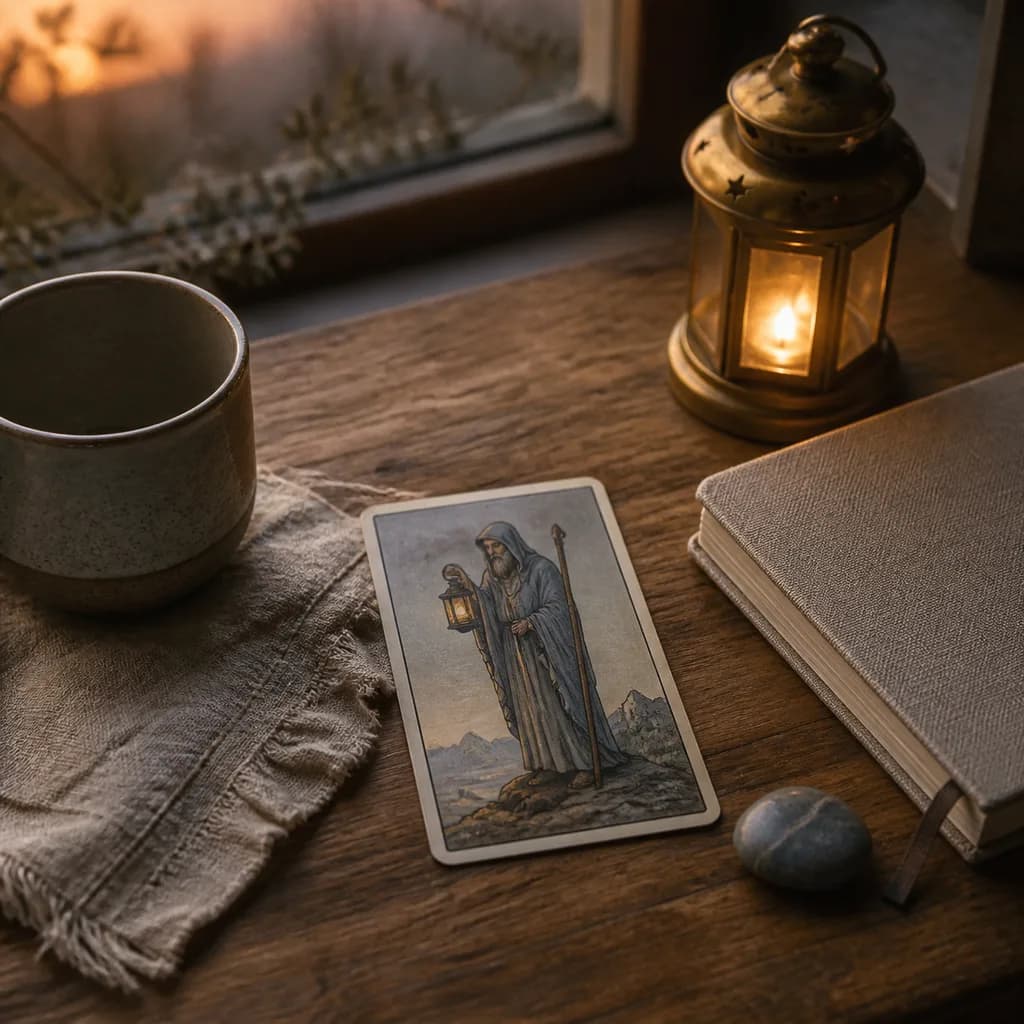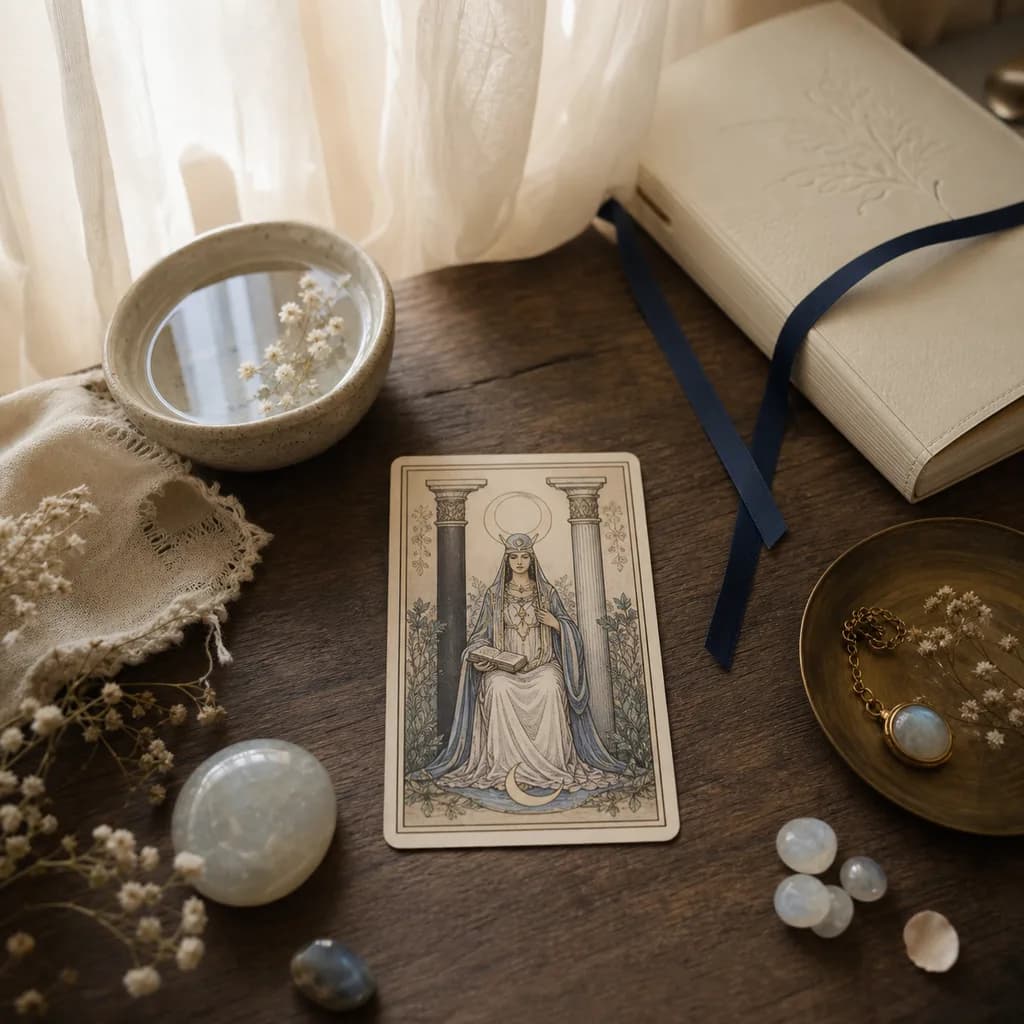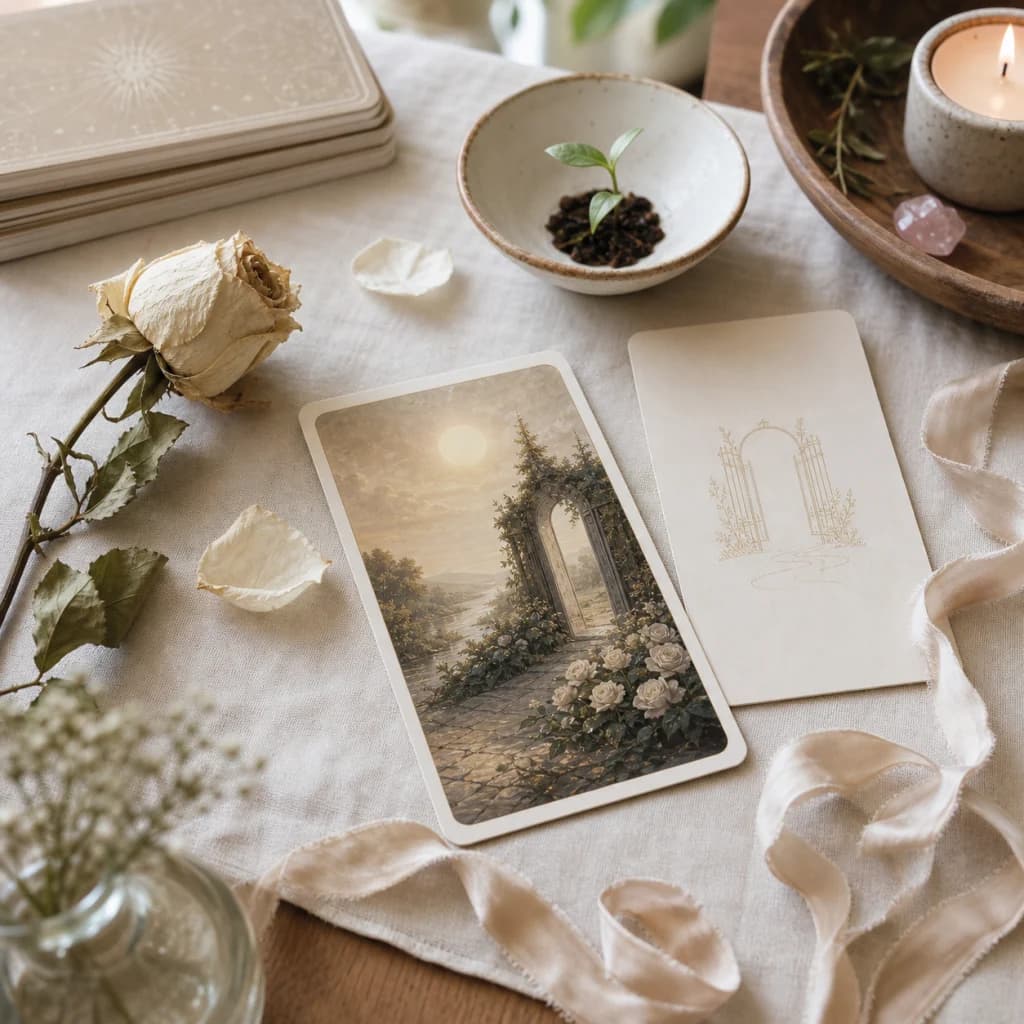
A woman sat down at my table in Tokyo last spring, drew Death for how a man felt about her, and went pale before I'd said a word. She'd been seeing him four months. "So he's done with me," she said. Hold on, I told her. What Death as feelings was actually showing — and I'd bet on this most times I see it — wasn't his feelings dying. It was the casual, undefined thing between them ending so something with a real shape could begin.
Death is the card people fear most and misread fastest. Here's what it honestly means for how someone feels about you, upright and reversed, and how to tell the difference that every other guide leaves you to guess.
Quick Answer
Upright, Death as feelings rarely means someone's feelings for you are dead — it means they're transforming: an old form of the connection (the friendship, the honeymoon phase, the on-and-off limbo) is ending so a changed, often deeper one can take its place. Reversed, it points to someone resisting that change — clinging to an old version of you, stuck and unable to let go or move forward. For an ex, Death usually signals a processed, permanent change rather than a revival of what was.
Death Upright as Feelings
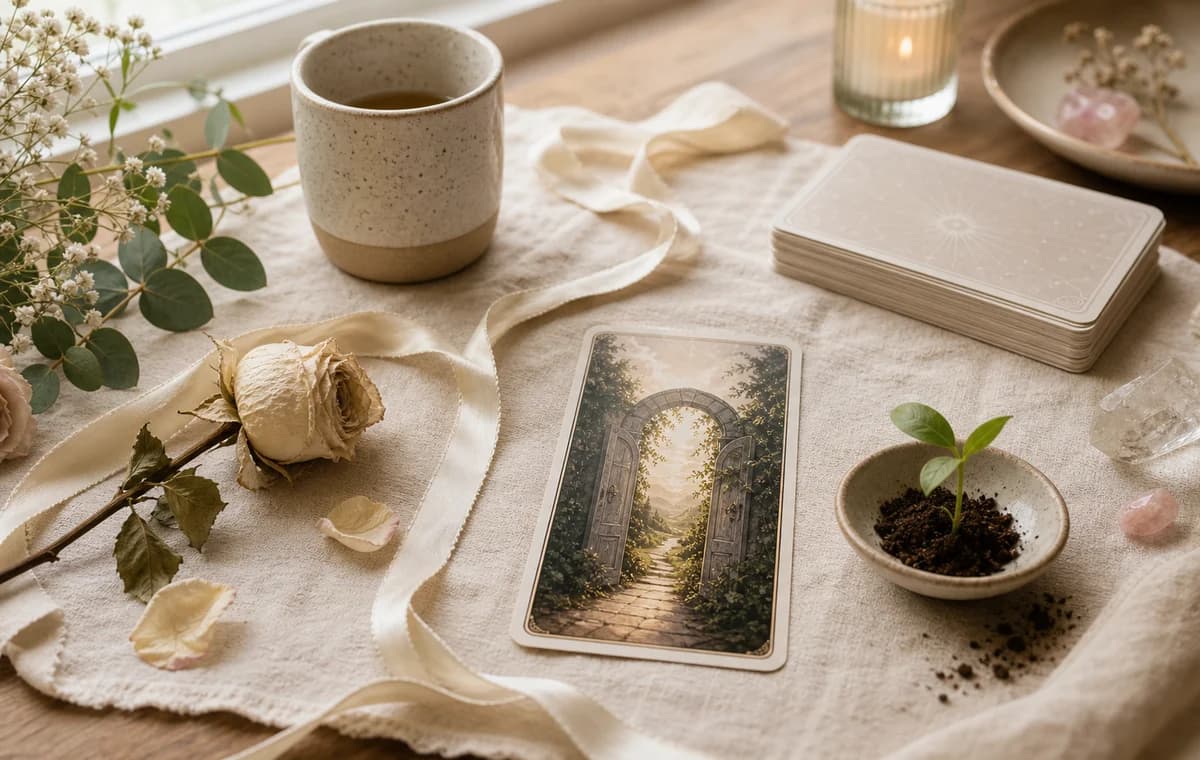
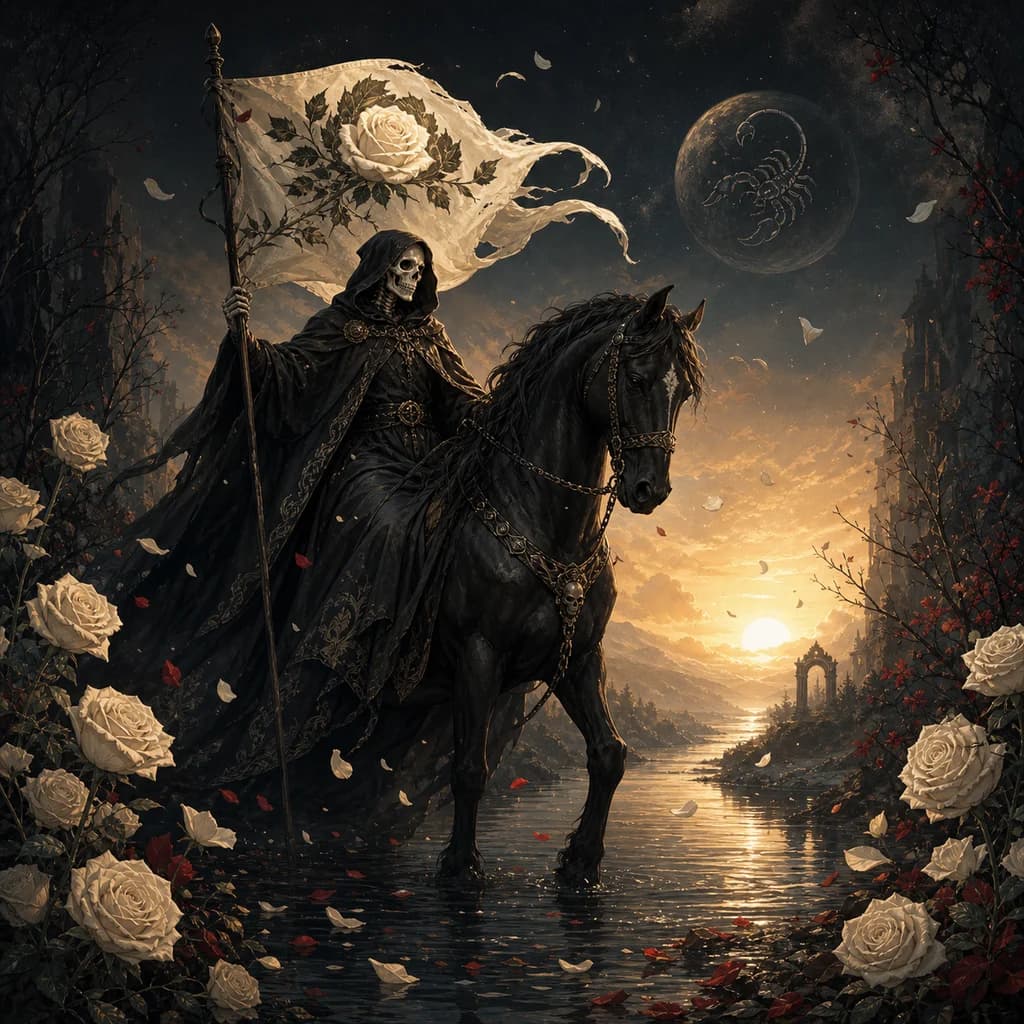
Picture the card itself for a second. The skeleton rides past a fallen king, but the bishop still kneels, the child still holds flowers, and behind it all the sun rises between two pillars. Nothing in that image is about annihilation. It's about a threshold.
When Death describes how someone feels, the feeling is going through a doorway. Something in how they hold you is ending — and something else is being born in the same motion. This is one of the most intense feeling-cards in the deck, not one of the coldest. It carries Scorpio's depth: when these emotions move, they move all the way down.
What's dying is almost never the caring. It's the container. The "we're just friends" label. The performance of the early weeks, where everyone's on best behavior. The exhausting on-again-off-again pattern. Death clears that out so what's underneath can stand on its own.
When you're single or it's new
Early on, Death is not a breakup card. It's a "this just got serious" card. The light, optional, keep-it-casual version of their interest is dying, and something with weight is replacing it. People who'd been treating you as one option among several often draw Death right when you stop being optional to them. If they ran a little cool before, this can be the exact moment the temperature changes.
In an established relationship
For a couple already together, Death marks the end of a chapter, not the relationship. The honeymoon glow is fading and the real, unperformed version of the bond is arriving — rawer, less polished, more durable if you both let the old shape go. It can feel like loss while it's happening. It usually isn't.
Death Reversed as Feelings
Before the interpretation, my position: reversed Death is not "extra dead." It's stuck. The transformation that wants to happen is being blocked, and the person is the one blocking it.
Reversed, they feel the change coming and can't make themselves walk through it. They're clinging — to an old image of you, to a dynamic that already stopped working, to a story about the two of you that quietly expired months ago. Their grip is the problem. They don't yet see that what they're holding is already gone, and the holding is exactly what keeps the new thing from being born.
Sometimes that clinging looks like coldness. More often it looks like limbo: they won't move forward and won't fully let go.
From a crush
Reversed Death from a crush usually means they sense something is shifting and are resisting it — not indifferent, stalled. They may be afraid of what wanting you would cost them, or holding onto a self-image ("I'm not ready," "I don't do this") that the feeling is starting to contradict. The feeling is real. The willingness to be changed by it isn't there yet.
From an ex, or during no contact
This is where Death earns its reputation for honesty. Upright, for an ex, it usually means they've processed the ending — not that they hate you, but that they've genuinely moved the relationship from "open" to "closed" inside themselves. That's a permanent change, not a paused one. Reversed, the reverse: an ex who can't move on, second-guessing, stuck circling something they won't repair. During no contact, upright Death is the silence of acceptance; reversed is the silence of someone frozen between holding on and letting go.
Is This the Death That Deepens, or the Death That Closes?
Here's the question every guide dodges. They all tell you Death "could mean transformation, or could mean it's truly over — check the surrounding cards." But you often have only the one card and a knot in your stomach. So let me give you what they won't: how to read the direction from Death alone.
Death deepening and Death closing are the same energy pointed at different things. The card never says "the love is dead." It says "a form is ending." Your only real job is to figure out which form. Ask: what specifically, in this connection, has outlived its shape? If the answer is a limitation — the casualness, the label, the best-behavior mask, the stalling — then Death is killing the barrier, and what's reborn is the bond itself, deeper. If the answer is the bond itself — if the relationship is the thing that has run its full course, with nothing left under it to keep — then Death is naming a true ending, and the honest gift is closure.
A practical tell: notice your own first reaction the second the card landed. Dread that something good is being threatened usually means there's a living bond underneath, and Death is clearing the obstacles around it. Relief, even a flicker of it, usually means part of you already knows the chapter is finished and is grateful for permission to close it. The card tends to confirm what the body already suspects. And one more thing I tell every client: Death never sends you backward. Whatever comes next, it will not be a copy of what was — only a new form, or none. If the ending feels sudden and shattering rather than slow and organic, you may be looking at its upheaval cousin — the Tower as feelings — instead.
Death vs. Ten of Swords as Feelings
These two get tangled because both involve an ending, and an anxious reader reads both as doom. They're not the same. Ten of Swords as feelings is the rock-bottom ending — the dramatic, painful, final-betrayal collapse, the moment something is over and it hurt. Death is quieter and more organic: the season turning, the inevitable transition that may sting but isn't a catastrophe. Ten of Swords says this collapsed. Death says this is becoming something else. If you're choosing between them, Ten of Swords carries grief and finality; Death carries transformation, and far more often than people fear, a door opening behind the one that closed. For the gentler cousin of walking-away energy, Eight of Cups as feelings is worth a look too.
You can read the full card on its Death tarot card meaning page.
How the Japanese Tarot Tradition Reads This
In Japanese タロット占い, Death (死神) is read less as destruction and more through 「生まれ変わり」(umarekawari) — rebirth, being born again into a changed form. A teacher of mine refused to call it a frightening card at all. She used to say the figure on the horse isn't an executioner; it's a 「区切り」(kugiri), a deliberate punctuation mark, the line you draw so the next sentence can begin. I think that reframe is closer to the truth than the English word "death." When this card describes how someone feels, it's rarely naming an end of love — it's naming the moment a feeling sheds one skin to grow another. The grief you feel is real, but it's the grief of molting, not of dying.
Frequently Asked Questions
Does Death as feelings mean they love me?
It can, very much — but it specifies changing love rather than steady love. Death usually means an old form of their feeling is ending so a deeper one can emerge. It's intense, Scorpio-deep emotion in transition. Rarely does it mean the caring is gone; far more often it means the way they hold you is being remade.
Does reversed Death mean they don't care?
Usually not. Reversed Death points to someone stuck — resisting a change they sense is coming, clinging to an old version of the connection rather than feeling nothing. The signature isn't coldness, it's limbo: unable to move forward, unable to fully let go.
What does Death say about my crush?
Upright, it means the casual, undefined version of their interest is ending and something more serious is taking shape — often the moment you stop being optional to them. Reversed, they sense the shift and are resisting it, frequently out of fear of what wanting you would change in their life.
Will an ex come back if I draw Death?
Death usually means your ex has processed the ending as permanent rather than paused. If any reconciliation comes, it won't be a revival of the old relationship — only a genuinely new dynamic, and typically not soon. More often, the honest gift of this card is closure that lets you both move forward.
Is Death a yes for love questions?
Not a clean yes or no — it's a "yes, but everything changes" card. It supports love that's willing to transform and end an outdated form, and it withholds support from anyone trying to keep things exactly as they were. If your question depends on nothing changing, Death is a no. If it allows for becoming, it's often a powerful yes.
Closing
If you drew Death for how someone feels, don't bury the connection before you've read the card properly. Sit with the one question that actually decides it: what form here has outlived itself — the barrier, or the bond? Name that, honestly, and Death stops being a verdict and becomes a map. Then do the thing the card is asking of you: let the old shape go, and see what's been waiting underneath to be born.
Want this card past the feelings question? Read the full Death tarot card meaning, compare it with Ten of Swords as feelings for an ending that's truly over, or plan a full reading with our love tarot spread guide.