A client in my Tokyo studio pulled The Chariot last winter, asking how a man she'd been seeing for two months actually felt about her. She looked deflated. "It's not a heart card, is it. It's a war card." I told her to wait. The Chariot as feelings is one of the most misread cards in the deck — not because it's cold, but because it expresses warmth in a language most people aren't listening for. He wasn't going to text her paragraphs. He was going to show up at her station, on time, in the rain, and that was the whole confession.
Here's what The Chariot as feelings really means, upright and reversed, what it says about a crush and an ex, and the one test that tells you whether his drive is love or just the chase.
Quick Answer
Upright, The Chariot as feelings points to strong, focused, determined emotion — someone who has made up their mind about you and is willing to push through obstacles to be with you. This is love expressed through action and momentum rather than words. Reversed, that drive loses direction: the feelings are still there, but they stall, scatter, or pull in opposite directions — inner conflict and lost control, rarely a sign he's stopped caring.
The Chariot Upright as Feelings
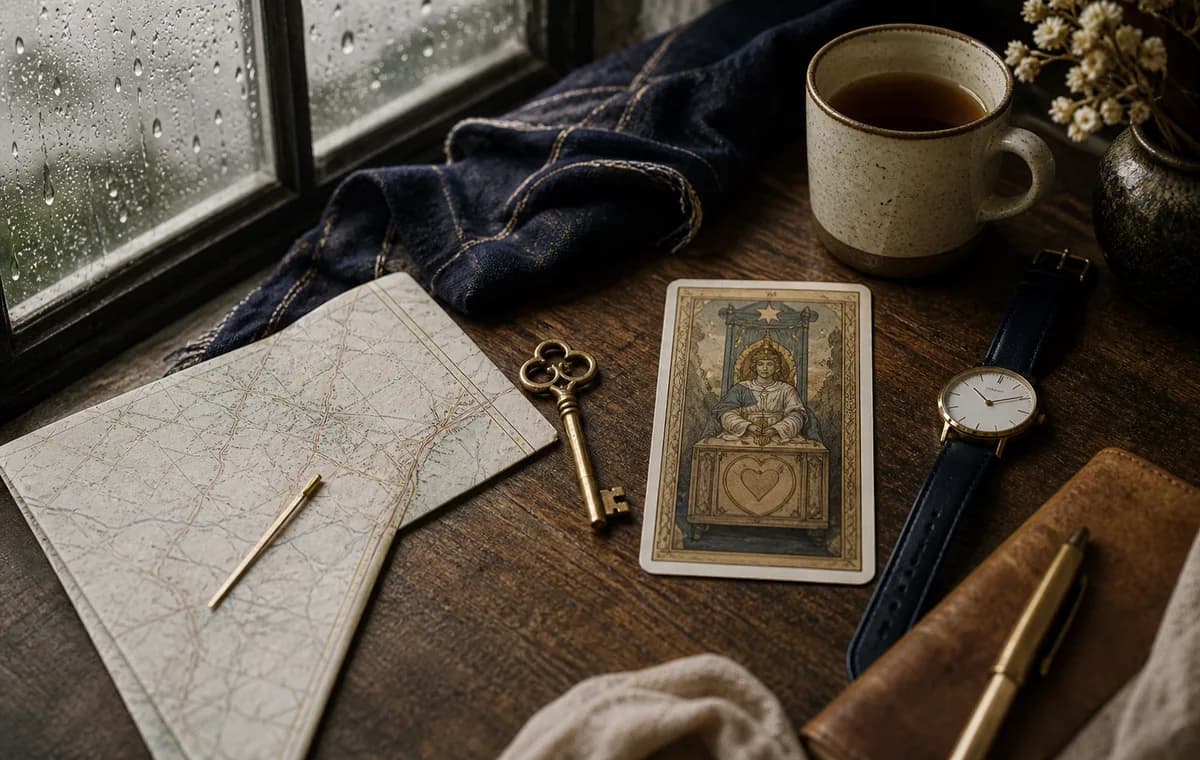
Picture the card. A figure stands in a chariot pulled by two sphinxes, one black, one white, that want to go in different directions — and he holds them in line by sheer will, not reins. That image is the feeling. When The Chariot describes how someone feels about you, it describes drive under control: strong emotion that has been pointed at you and put into motion.
The defining quality is certainty. This isn't the wavering of a new crush testing the water. He has decided. His heart and his head are, for once, pulling the same way, and what comes out is forward motion — toward you, toward the next step, toward whatever stands between where you are and where he wants to be.
And here's the part I always slow my clients down on: this card loves through doing. The Chariot person doesn't promise to be there. He arrives. He doesn't describe his feelings; he drives across the city to hand them to you. If you've been waiting for a speech, you may be standing right next to the proof and not recognizing it.
When you're single or it's new
Early on, the upright Chariot is unusually decisive for a fresh connection. He's not playing it cool, and he's not weighing whether you're worth it — he's already past that question and into pursuit. Expect initiative: he plans, he follows through, he closes distance. The intensity can feel fast. That speed is the feeling, not a red flag in itself.
In an established relationship
For a couple, The Chariot marks someone determined to move the relationship forward and to defend it. He feels protective, ambitious for the two of you, willing to fight through a rough patch rather than drift out of it. If something has been stuck, this card often means he's the one putting his shoulder to it.
The Chariot Reversed as Feelings
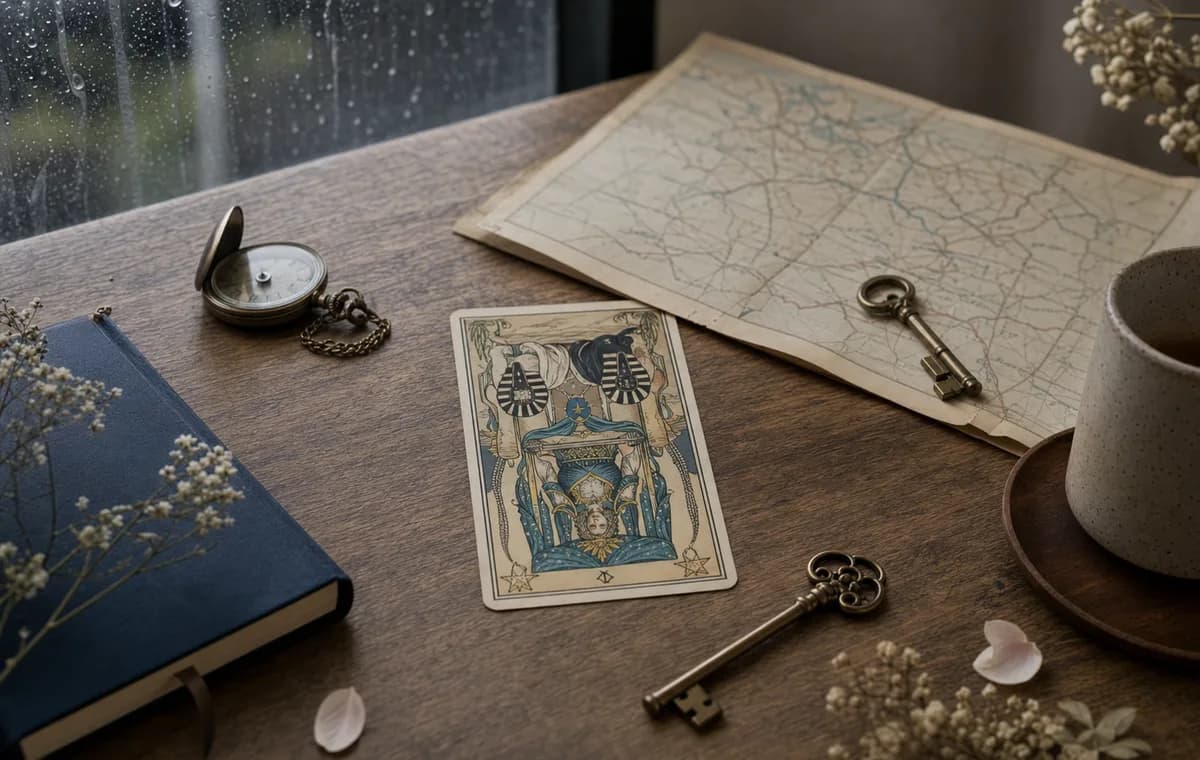
Before the gloom: reversed almost never means he feels nothing. The Chariot is a card of momentum, so reversed it's momentum gone wrong — not love switched off.
Most often it's loss of direction. The same person who felt certain now feels pulled in opposite directions, those two sphinxes straining apart with no hand holding them. He cares, but he's stuck in his own head — ready to go all in one day, pulling back the next, unable to find the clarity that makes the upright version move. It reads as hot and cold, and it's exhausting to be on the other end of, but the engine is misfiring, not dead.
There's a sharper edge too, and I'll name it because the card carries it: control turned the wrong way. Reversed Chariot can describe someone trying to steer you — pushing, pressuring, treating the relationship as something to win rather than share. The tell is whether his drive bends toward you or against you.
From a crush
Reversed Chariot from a crush usually means real interest tangled in indecision. He's drawn to you and can't get his own foot off the brake — wanting to move, not trusting himself to. Less often it's the controlling read: intensity that's about his need to win rather than about you. Watch which way the pressure points.
From an ex, or during no contact
Here The Chariot is more honest than comfortable. Upright in no contact, it often shows an ex whose feelings are still fully engaged and aimed at you — he hasn't drifted; he's deciding whether to drive back. Reversed, it's the same feeling jammed: he may want to return and can't get out of his own way, or his pride and his hurt are pulling against each other. This is rarely an ex who has gone numb. It's one still gripping the reins.
Once He's Won You, Does the Drive Stay?
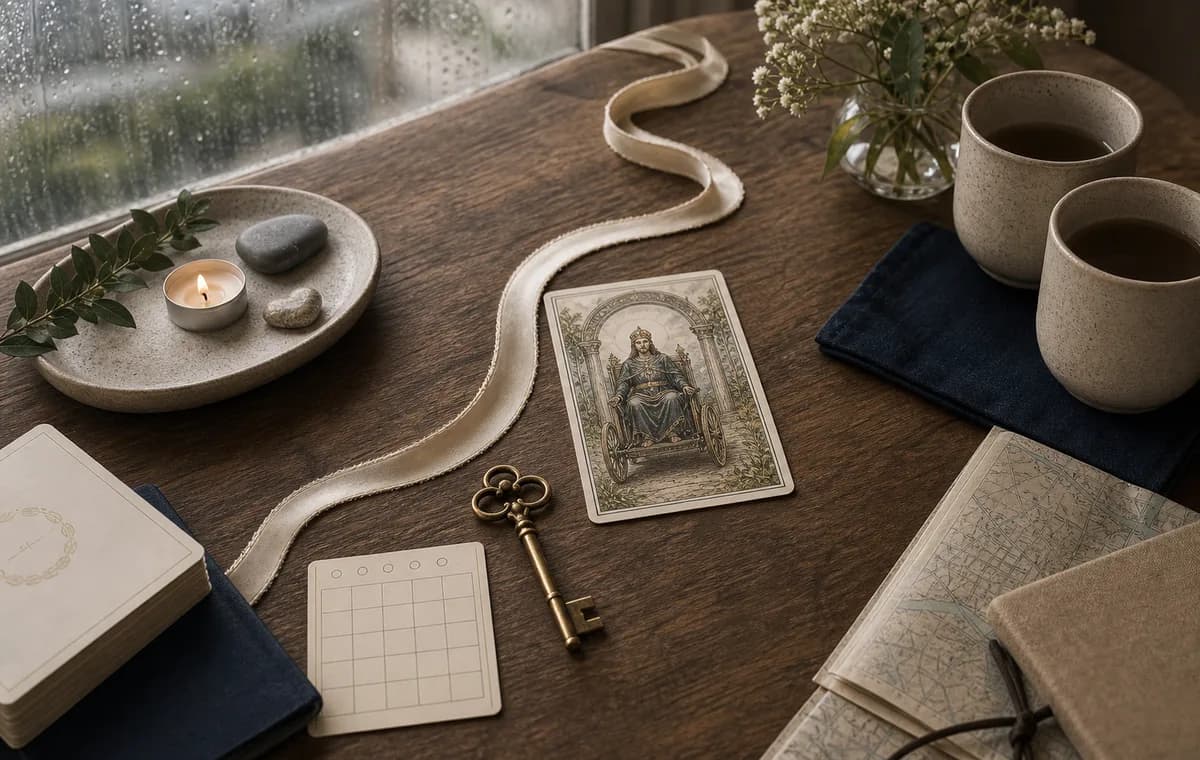
This is the question The Chariot actually puts to you, and almost no reading answers it. Every guide warns you the Chariot can be "the thrill of the chase" — that he might want you as a prize, not a person. True. But naming the danger isn't the same as helping you test for it, and that's where I want to be useful.
Remember how the engine runs. The Chariot moves by overcoming resistance; the sphinxes are held by will, and will needs something to push against. So the diagnostic isn't how hard he pursues — chase energy and devotion look identical mid-pursuit. The diagnostic is what happens after the obstacle is gone. When you finally say yes, when the distance closes, when there's nothing left to conquer — does the drive redirect, or does it go quiet?
Devotion redirects. The same will that chased you turns toward building: he starts steering the two of you somewhere, planning, showing up in the unglamorous way that has no audience and no win to score. Conquest cools. Once the trophy is on the shelf, the energy that felt like passion has nowhere to go, and you feel the temperature drop the week after you stopped being hard to get. If you're unsure which Chariot you've drawn, stop measuring the heat of the pursuit and start watching what he does with the calm after it. A driver who loves you keeps driving when the road goes flat.
The Chariot vs. the Knight of Wands as Feelings
These two get confused because both are fast, hot, and forward-moving. The difference is control. The Knight of Wands as feelings is passion off the leash — exciting, impulsive, real, but liable to blaze up and wander off when the next bright thing appears. The Chariot is passion harnessed — the same fire, but aimed and disciplined, with armor on. The Knight feels you and acts on impulse; the Chariot feels you and commits to a direction. If you want to know whether the intensity will last past next month, that's the line that separates them. (If your card is the steadier, more devoted relative of this energy, compare the King of Wands as feelings too.)
How the Japanese Tarot Tradition Reads This
In Japanese タロット占い, The Chariot (戦車) is read closely with 「意志力」(ishiryoku) — willpower, the force that holds two opposing pulls in line and moves anyway. A teacher of mine framed the upright Chariot in love not as aggression but as 「覚悟」(kakugo): a settled resolve, the moment a person stops wondering and decides to carry something through whatever comes. I find that more exact than the English "determination," which can sound merely stubborn. Kakugo has weight — it's the feeling of someone who has quietly accepted the cost of choosing you and chosen anyway. When this card describes how somebody feels, that resolve is often the truest thing in it: not loud, but committed all the way down.
Frequently Asked Questions
Does The Chariot as feelings mean they love me?
Often yes — but it's love expressed as drive and commitment rather than soft words. The Chariot points to someone determined to be with you and willing to push through obstacles to get there. Read his actions, not his vocabulary; with this card, showing up is the declaration.
Does the reversed Chariot mean they don't care?
Usually not. Reversed more often means the feeling has lost direction — stalled, conflicted, pulled both ways — than that it's gone. The one warning sign is control aimed at you rather than the relationship: pressure to win rather than effort to build. Short of that, reversed is feeling that's misfiring, not feeling that's absent.
What does The Chariot say about my crush?
Upright, your crush feels focused and decisive about you and is likely to take initiative rather than wait. Reversed, the interest is real but caught in indecision — drawn to you yet unable to commit to moving. Watch whether the pursuit points toward you with care or pushes at you with pressure.
Will an ex come back if I draw The Chariot?
It's one of the more engaged cards to draw about an ex — it rarely shows someone who has gone cold. Upright suggests feelings still aimed at you and a possible decision to drive back. Reversed suggests the same desire jammed by pride or inner conflict. Not a guarantee of return, but rarely the sign of an ex who has truly let go.
Is The Chariot a yes for love questions?
Generally yes — a strong, action-backed yes when upright, since the card is all forward motion and resolve. Reversed it softens to "yes, but the direction is unclear," pointing to stalled momentum or mixed signals rather than a flat no.
Closing
If you drew The Chariot for how someone feels, stop straining to hear the words and start watching the wheels. This is love that proves itself by arriving, by deciding, by driving through what would stop a less committed person. Give it one test before you trust it completely: see what he does with the quiet after the chase is won. If the drive turns toward building a life with you instead of fading once you're caught, you're looking at the real thing. Meet that resolve by being clear about your own.
Want this card beyond the feelings question? Read the full The Chariot meaning, compare it with the Knight of Wands as feelings, or plan a full reading with our love tarot spread guide.