Every guide I've read names the same trap and then leaves you stranded in it. They tell you the Page of Wands as feelings is a genuine spark, warn you to "see if the fire sustains itself," and stop there, at a sentence you can nod along to and absolutely cannot run. So here is the part nobody hands you: a way to actually find out. The spark is real. Whether it ever turns into motion is the entire reading, and you can score that in two weeks if you know what to watch. (For the upright and reversed card outside of romance, see the full Page of Wands card meaning.)
Quick Answer
Page of Wands as feelings means a fresh, fiery, genuinely excited attraction: real crush energy, curiosity and butterflies, but early-stage spark, not yet emotional depth or commitment. Reversed, it points to hesitation, a wavering or fading spark, feelings that lack direction, not emptiness or coldness. The heat is real but un-aimed, and whether it organizes into pursuit is the whole reading.
What the Page Is Actually Holding
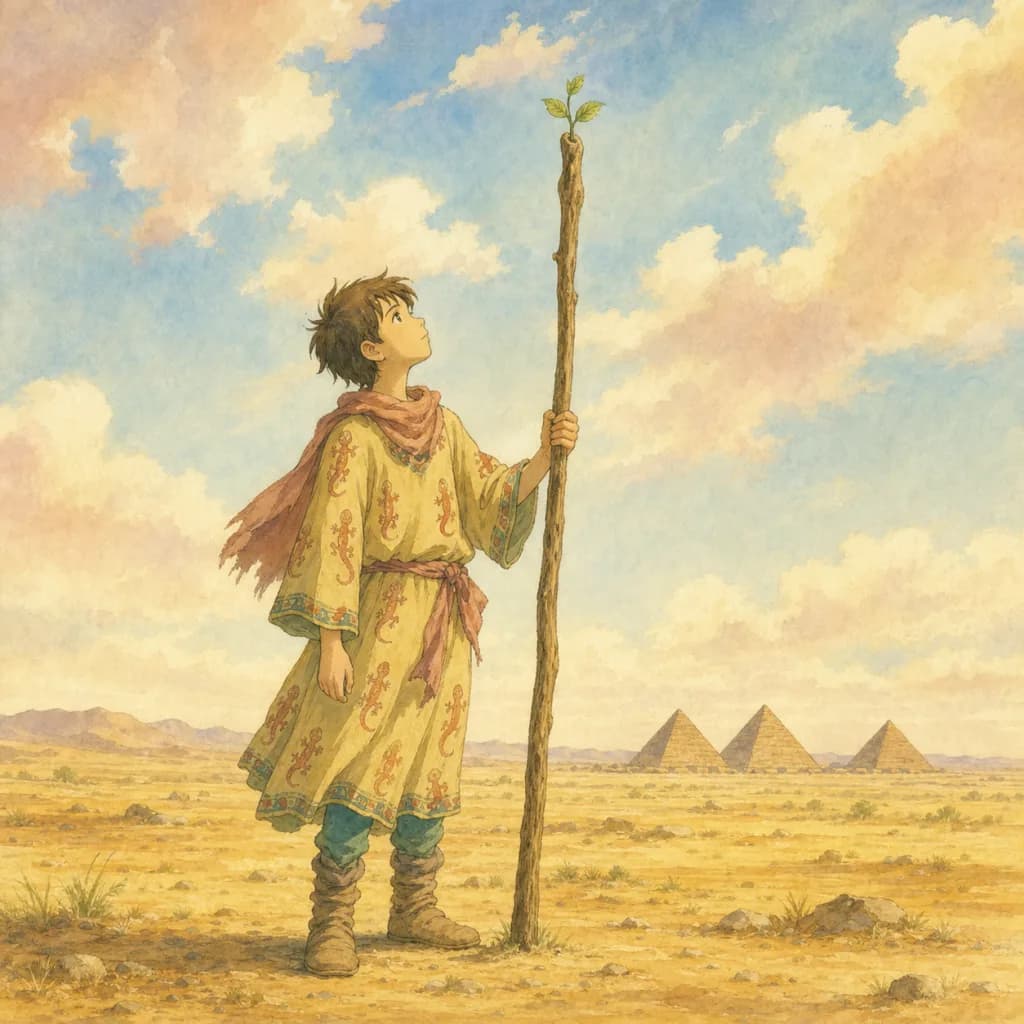
Look at the figure in the Rider-Waite-Smith image and read it as a feeling. The Page holds a budding wand and gazes up at it. He has not moved toward anything. That forward motion, the chase, the gallop, belongs to the Knight. The Page is admiring the spark, not aiming it. That distinction drives everything below.
He channels Fire, which is why the feeling runs hot, impulsive, restless, hungry for the next new thing. Youthful, playful, flirty, quick to fall and quick to talk. With Wands, an absence of visible action isn't a mystery to decode. It's data, the same suit grammar the King of Wands as feelings sets out in full. So when the heat is loud but nothing happens, that silence is telling you something.
A spark is a state, not a direction. The feeling is real and it is un-aimed. It's excitement on day one, before friction, before a dull Tuesday, before any reason to choose you over the next bright thing that walks in. That's not cynicism; it's just where the Page lives. Compare him to the Queen of Wands as feelings, the fire that already knows its own worth and aims itself without being asked. The Page hasn't gotten there. The question is never how brightly it burns. It's whether it ever turns into motion.
Page of Wands Upright as Feelings

Upright, this is a genuine spark — enthusiasm, curiosity, butterflies, the "I want to know everything about you" charge that makes a person text at odd hours just to keep the thread alive. It's a good sign. They are drawn to you and visibly energized by you. The pull is sincere and the excitement is not faked.
The caveat matters here, because the whole card hinges on it. This is the honeymoon rush, with passion out in front and intimacy and commitment still developing somewhere behind the heat. Sternberg would call it the early corner of the triangle, where attraction sprints ahead of everything that takes time. The spark is leading. The depth hasn't been built yet, and the card doesn't pretend it has.
There's a quieter distinction worth planting now, the one the stress test below will resolve. Are they lit up by you, specifically, or rediscovering that they can feel a spark again, with you as the current object? Those look identical in week one. A man at my Shinjuku table pulled the upright Page about a woman who'd told him she "felt alive again" after a long flat year, and I had to ask him the uncomfortable question: was she alive because of him, or just glad to be alive near someone, anyone? He didn't like the question. He also didn't have an answer, which was the answer.
Single or New Connection
Flirty, fast-igniting interest. Lots of messages, lots of "we should go to…," a high novelty charge that makes the early days genuinely fun. Enjoy it. That thrill is real and worth having. Just don't grade the relationship by its week-one wattage, because every Page burns bright in week one. Bright is the baseline here, not the signal.
In an Established Relationship
For a couple, the upright Page usually reads as re-ignition: a partner seeing you with fresh eyes, wanting adventure, novelty, "let's spice things up again." That's good news. A relit spark still has to be fed the same way the first one was, though. Don't read the flare as proof the work is done; a couple who treats the spark as a finished project tends to watch it gutter by next month.
The 3-Signal Page-of-Wands Stress Test

Every guide names the trap ("see if the fire sustains itself") and then hands you no way to run it. That's the gap I want to close. Here is the test: three checks, all observable, scored across roughly two weeks, no vibes required. You are not reading his soul. You are reading whether this feeling has a direction yet.
Signal 1, the Conversion test. Do the exciting messages ever harden into a calendar-fixed plan with an actual day on it, or do they stay perpetually "we should…" and "one day we have to…"? A copywriter in Shimokitazawa drew the upright Page about a man who texted her three full paragraphs about a Hokkaido trip "we have to take," then went quiet the day she asked which weekend actually worked. The exciting messages never once survived a calendar. A Page that never converts talk into a fixed date is a Page that likes the talking.
Signal 2, the Friction test. Does the enthusiasm survive one boring logistical exchange (a reschedule, a dull Tuesday text, a non-novel errand), or does it only light up around novelty? Heat that shows up exclusively for the exciting parts is heat attached to the excitement, not to you. Send the unglamorous message and watch what the energy does when there's nothing fun in it.
Signal 3, the Initiation-symmetry test. After a natural gap of silence, does their interest re-spike on its own, or only after you re-stimulate it? A graphic designer in Nakameguro noticed her match only re-lit when she struck the first match: every silence ended with her message, never his, and the spark re-spiked on cue the moment she did. She was the kindling, and the card had been saying so for a month. If the fire only relights when you strike it, you are the kindling, not the flame.
That's the reframe nobody else owns. Are you the spark or the kindling: does the excitement want to become something, or does it only want to keep feeling exciting, a fresh crush enjoyed as self-entertainment? Score it: 2 or 3 of 3 means the spark is organizing into pursuit, a Page maturing toward the Knight. 0 or 1 means a spark that keeps resetting toward the next novelty. Two weeks isn't a verdict on who they are. It's a verdict on whether what they feel has anywhere to go.
Page of Wands Reversed as Feelings

Take the stance first, because most readings get this backward: reversed is not "they feel nothing." It's hesitation, fickleness, a wavering or fading spark — feelings that genuinely exist but lack the direction or confidence to organize into action. Read it as a stalled spark, not a cold one.
Two flavors live under the reversal. The first is the spark that hasn't found its nerve: the interest is real, but the courage or clarity to act on it isn't there yet. The second is the spark that already flared and is drifting toward the next new thing — restless, a little bored, non-committal. Same card, opposite trajectories, and the stress test tells them apart.
Your Crush
Real but flickering interest, bright when you're novel and distant on an ordinary day. This is exactly where you run the Friction and Initiation-symmetry signals before you decide anything. One dull week is not the whole answer with this card, but a pattern of going dark whenever the novelty dips is. Wait for the pattern, not the moment.
An Ex, or a No-Contact Stretch
Over an ex, the reversed Page often shows a renewed sense of potential — a "turn a new leaf" impulse, a flicker of the old spark. But reversed, it's an impulse without a plan attached. Weigh whether a concrete move actually appears. An ex who re-spikes only when you reach out is feeling the buzz of the idea of you, not committing to the return. A will my ex come back tarot spread tests directly whether the new-leaf feeling is a plan or just a mood, and if the renewed potential turns out to have real weight behind it, the reconciliation tarot reading guide walks the half-open door.
Page vs Knight vs Ace of Wands: One Fire, Three Stages
These three draw the single fire spectrum competitors only gesture at. The Ace is impersonal ignition, raw fire with no one attached to it yet; it answers "is there fire?" The Page is a person holding that spark, deciding, mostly without noticing, whether to feed it. The Knight is the spark already in motion, pursuit underway.
Page versus Knight is the core pairing. The Page is the spark that has not moved yet; the Knight of Wands as feelings is that same spark already galloping. A feeling that passes the three-signal test is, quite literally, a Page maturing into a Knight — the state finally finding a direction.
The split with the Ace is just as clean. The Ace of Wands as feelings can light with no one in the room; it tells you fire exists but not who's holding it. The Page tells you fire exists and that a specific person is holding it toward you, which is more, and still not enough on its own. Further down the road sits the endpoint: the King of Wands as feelings, fire that already chose, declared, and built a throne, the Knight's heat twenty years older. The whole map fits in one line: Ace ignites, Page admires, Knight chases, King keeps.
Does the Page of Wands Mean They'll Reach Out Soon?
Lean yes. The Page is the suit's messenger, so expect news — a spontaneous message, an excited "guess what," something warm and impulsive rather than a measured confession. When a Page-type likes someone, it shows as playful teasing, sudden bursts of attention, big ideas and invitations ("we should go to…"), flirty and communicative energy. It's lovely. It also clusters around novelty and can vanish on a flat day.
Which is exactly why frequency of contact is the wrong metric here. A Page reaches out easily and often; counting messages tells you almost nothing. Measure conversion and friction instead. One concrete move: next time the exciting message lands, reply with a boring logistical question and watch what the enthusiasm does.
How Japanese Tarot Tradition Reads This Card
In Japanese tarot practice, I read the Page of Wands through one word — tokimeki, the flutter, the heart-skip of a fresh thrill. It's a beautiful thing to feel and to name. It's also worth being honest about what tokimeki structurally cannot promise: tomorrow. The flutter is, by definition, a feeling about right now.
Japanese love readings prize quiet consistency over loud novelty, which makes this bright, restless Page the court card I tell clients to enjoy without over-trusting. Tokimeki is the state; the three-signal test is how you find out whether there's a direction underneath it. Sincere and impermanent aren't a contradiction to resolve here — they're the same fact, seen twice.
A Spark Is Honest. It Just Isn't a Promise.
A Page-of-Wands spark is one of the most honest things in the whole deck, and one of the least binding. Both are true at once, and you don't have to choose between them. So enjoy the butterflies — really enjoy them. Just don't pour foundations onto a feeling that hasn't moved yet. Heat tells you it caught. Only motion tells you it's staying.
Frequently Asked Questions
Is the Page of Wands a yes or no card for feelings?
A qualified yes — yes to genuine spark, attraction, and energy, but not yet to depth or commitment, because the Page is a beginning, not a verdict. It confirms the fire caught; it says nothing about whether anyone intends to feed it. Treat it as a green light for a beginning and run the three-signal test before reading it as a settled answer. If you want a cleaner up-or-down read, pair it with a yes or no tarot spread.
Does the Page of Wands mean someone has a crush on me?
Often, yes — this is classic crush energy: butterflies, curiosity, a fast-igniting interest that lights up around you. The catch is that it can be inspired by you specifically, or it can be them rediscovering they can feel a spark again, with you as the current object. Watch whether the excitement organizes into plans, or only keeps wanting to feel exciting.
What does the Page of Wands reversed mean as feelings?
Hesitation, fickleness, or a wavering, fading spark — feelings that may genuinely exist but lack the direction or confidence to act on. It rarely means coldness or emptiness; read it as a stalled spark, not a dead one. The tell is whether the interest survives an ordinary day and re-spikes on its own, or only lights up around novelty and your effort.
Will the Page of Wands mean my ex will come back?
It often shows a renewed sense of potential — an ex feeling a "new leaf" impulse and a flicker of the old spark. But the Page is excitement that hasn't moved yet, so the impulse can arrive with no plan attached. Weigh whether a concrete move appears, and use a will-my-ex spread to test whether the new-leaf feeling is a plan or just a mood.
How does the Page of Wands act when they like someone?
Playfully and impulsively — sudden bursts of attention, flirty teasing, big ideas and spontaneous invitations like "we should go to…". The energy is warm and communicative but clusters around novelty, so it can vanish on a flat day. Because a Page reaches out easily, frequency of contact is the wrong metric — measure whether the talk ever converts into a calendar-fixed plan.
What is the difference between the Page of Wands and the Knight of Wands as feelings?
The Page is the spark that hasn't moved yet — admiring the wand, lit up but un-aimed; the Knight is that same spark already galloping, in active pursuit. A Page that passes the three-signal stress test is essentially a feeling maturing into a Knight. If you're already seeing chase, plans, and motion, you've left Page territory and entered the Knight's.
Closing
Don't grade this one by how hot week one runs. Pick the next two weeks instead, watch the three signals (conversion, friction, initiation-symmetry), and let the count, not the wattage, tell you what you're holding. To lay a full reading around the single card, our love tarot spread guide gives you the surrounding context. The Page is good news held lightly: a real spark that hasn't decided anything yet. The deciding is the only part worth waiting to see.