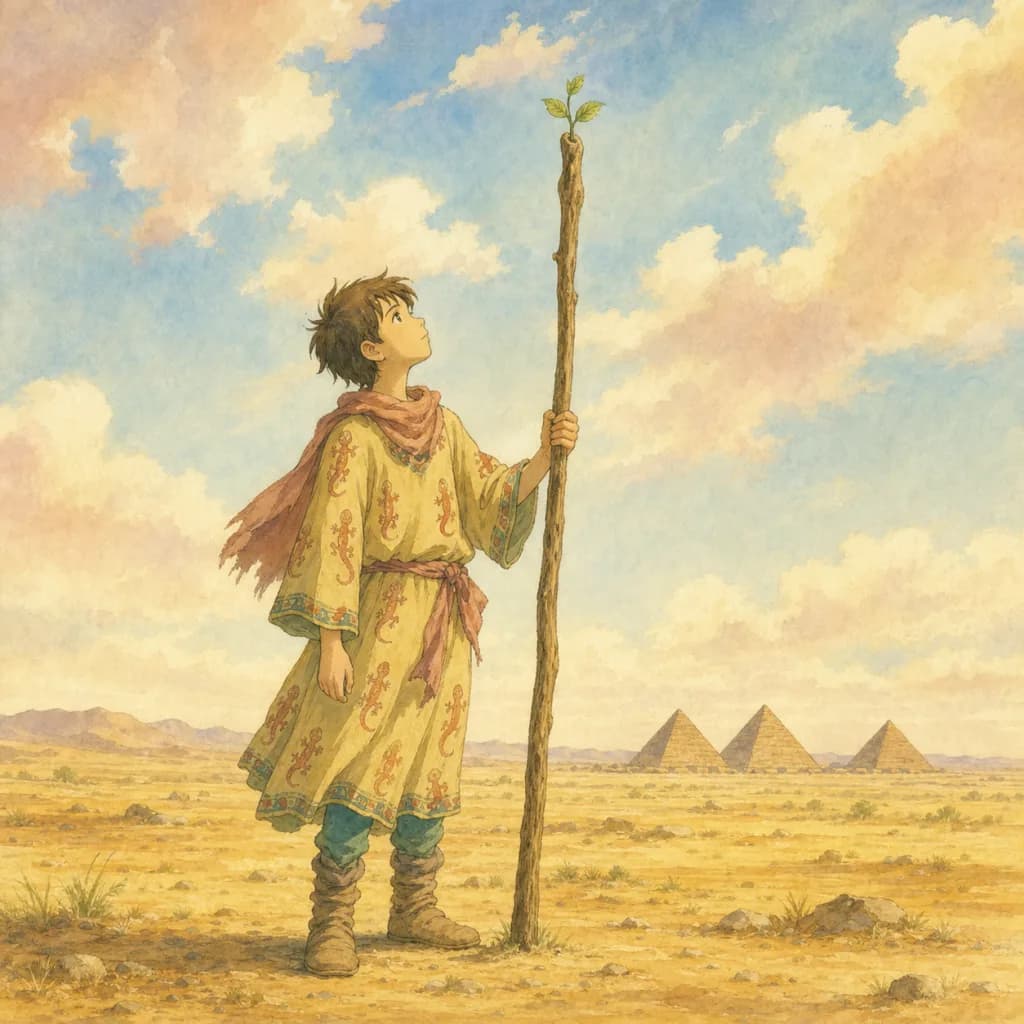
A young figure stands alone in a yellow desert, holding a wand taller than he is, his head tilted back to stare at the single green shoot sprouting from the top of his stick. He has forgotten to look where he is going. He has not taken a step. He is not even facing forward. He is just transfixed by the fact that the thing in his hand is alive. That posture is the whole Page of Wands meaning in one frame, and almost every guide skips straight past it to "good news is coming."
The card is enthusiasm caught at its earliest, most contagious, least proven moment.
Quick Answer
Upright, the Page of Wands means curiosity, a free spirit, a new idea arriving with real excitement, and often a fiery message or piece of good news. It is the urge to explore something before you know whether it will last. Reversed, that fire scatters: hesitation, all-talk-no-action, a creative block, or bad news that deflates a plan before it starts. As a court card it usually points to a person, an attitude, or a phase. It carries the energy of beginning, and stays quiet on how things finish.
Basic Information
| Card Name | Page of Wands |
| Suit | Wands |
| Arcana | Minor Arcana |
| Element | Fire |
| Astrological Correspondence | The earthy, grounding face of the fire signs — Aries, Leo, Sagittarius |
| Yes / No | Yes (with enthusiasm, light on guarantees) |
| Upright Keywords | exploration, curiosity, free spirit, new idea, enthusiasm, a fiery message |
| Reversed Keywords | hesitation, scattered energy, all talk no action, bad news, creative block |
Card Imagery & Symbolism
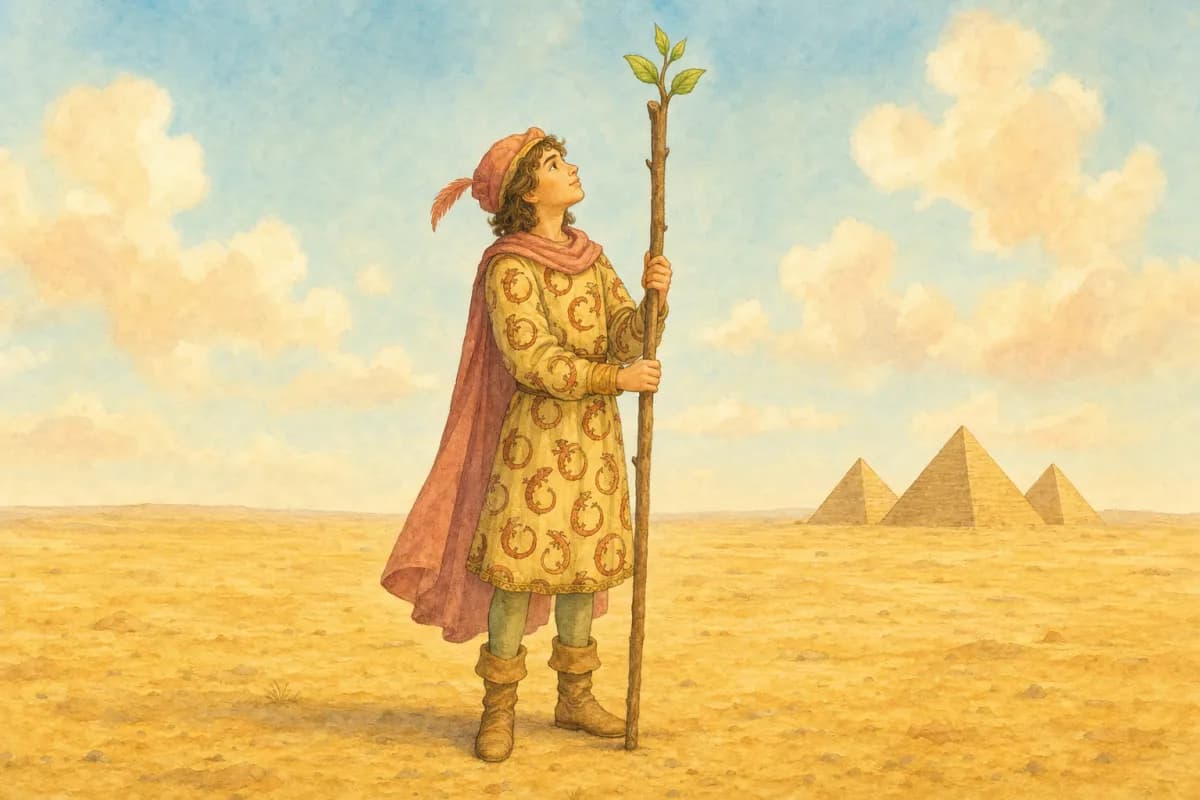
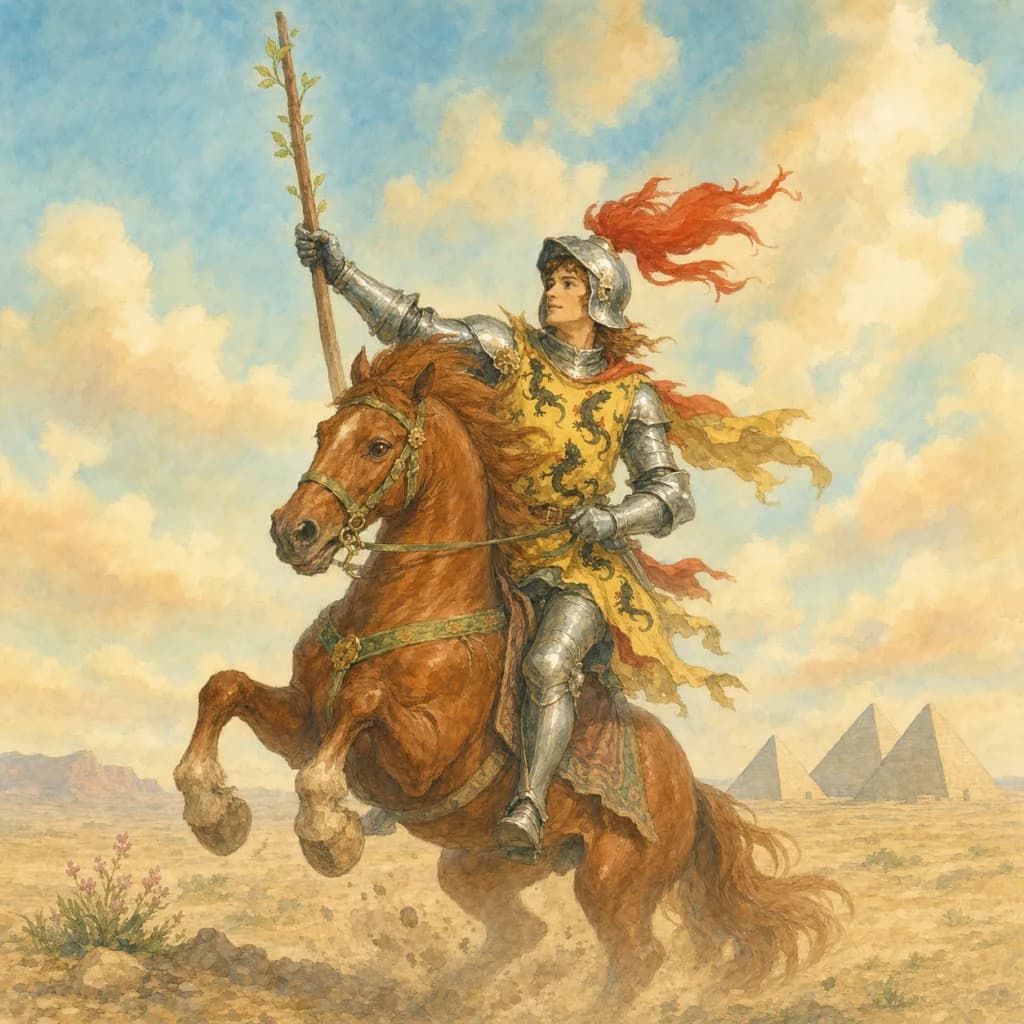
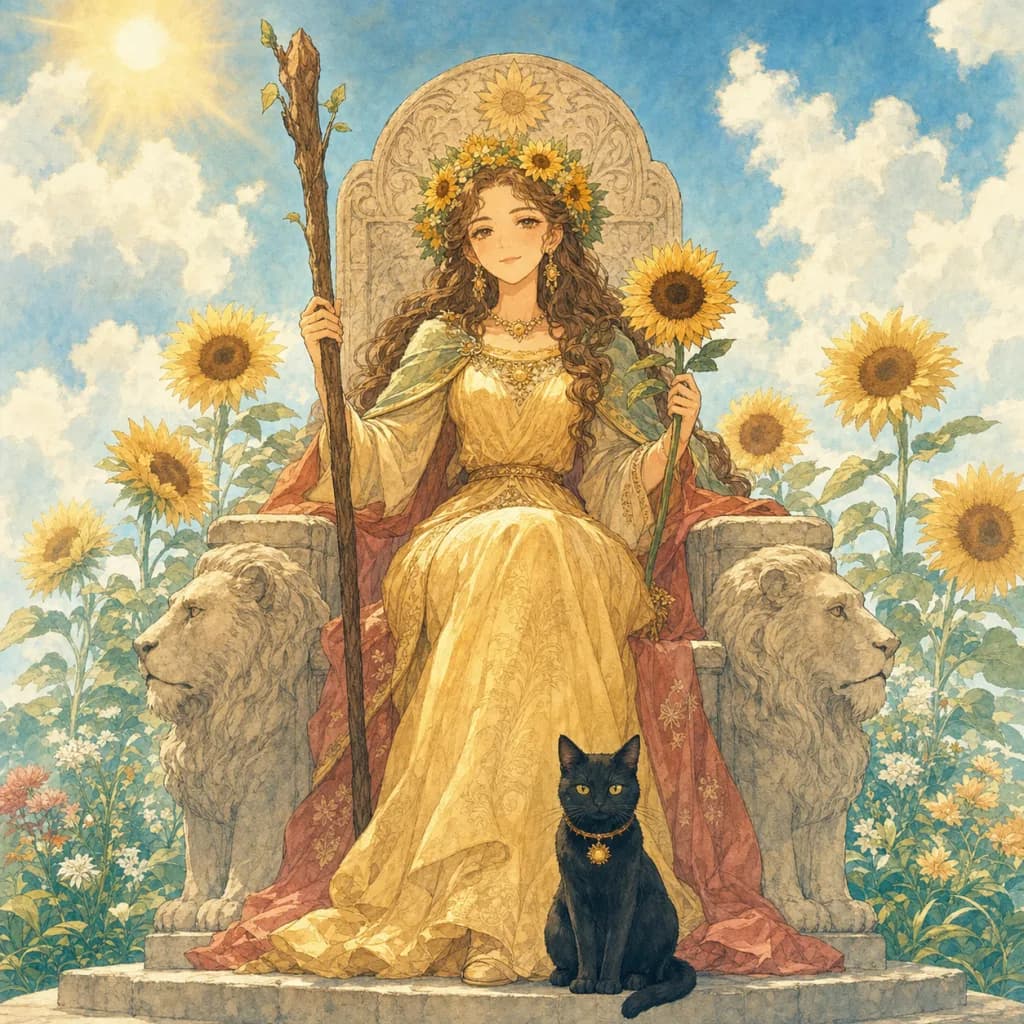
Pull up the Rider-Waite-Smith image and the first thing to notice is how empty the picture is. One youth, one sprouting wand, a flat desert, and three small pyramids parked far away on the horizon. Pamela Colman Smith gave the other Wands court figures something to push against — the Knight has his charging horse, the Queen her throne and her cat. The Page has nothing but the idea and a lot of open sand. That emptiness is deliberate, and the details inside it carry more weight than a first glance suggests.
A Youth Looking Up at His Own Wand, Not at the Road
The figure does not gaze at the horizon, the pyramids, or any destination. He looks up at the shoot on his stick. Read that gesture literally: he is more fascinated by the idea than by where it could take him. This is the difference between the Page and the Knight, a difference often blurred into a vague "youthful energy." The Knight points his wand forward and gallops. The Page admires it standing still. That upward, slightly entranced look is the card showing you a person in love with the spark itself, which is a wonderful state to be in and a precarious one to mistake for commitment.
Salamanders That Have Not Finished Forming
His tunic is patterned with salamanders, the medieval emblem of fire and of surviving the flames. Here is the detail worth slowing down for: look closely and the salamanders are incomplete. Many of them curl with their tails near their mouths, not quite closing into the ouroboros, the ancient circle of a creature swallowing its own tail. A closed ouroboros means a completed cycle, something self-sustaining. Smith drew these half-formed, mouths and tails not yet meeting. The fire on this Page's clothing still runs on an outside source to keep burning. Those open-mouthed salamanders come up again later, because they are the single best diagnostic the card offers.
Three Pyramids, Very Far Away
Three pyramids sit small on the right horizon, across a stretch of barren ground. Pyramids are built things — structure, achievement, monuments that took years and thousands of hands. The card places them deliberately out of reach of a boy holding a stick. The message here is one of scale. There is something buildable in the distance, and between the spark and the monument lies a whole desert that the Page has not crossed and is not, at this moment, even looking at. The land sits barren because the work is still ahead; the soil could grow plenty once someone walks out and tends it.
Page of Wands Upright Meaning
Core keywords: exploration, curiosity, a free spirit, a new idea, enthusiasm, a fiery message.
Upright, the Page of Wands is the moment a new interest grabs you before anyone can tell you it is impractical. It is the night you fall down a rabbit hole about a subject you knew nothing about that morning, the sudden plan to learn an instrument, the itch to travel somewhere with no real reason except that it sounds alive. The card celebrates that pull. It says the curiosity is genuine and worth following, and it stays quiet about whether you have a plan yet.
As the suit's classic "messenger," the Page often brings news, and Wands news tends to be hot and exciting — an invitation, an opportunity, an offer, a yes you were hoping for. When this card lands in a spread it frequently signals that word is on its way, usually the kind that makes you want to move.
There is a quality to Page of Wands energy that separates it from the deck's other beginnings. It is playful. It explores for the sheer joy of exploring, with no destination in mind. A child who tries the violin, the trampoline, and watercolors in a single afternoon is simply being a Page of Wands, learning the shape of his own enthusiasm by sampling everything. When the card appears as a person, expect someone bright, restless, a little rebellious, easy to inspire and quick to talk.
The upright posture, then, is simple: follow the curiosity now, while it is fresh, and forgive yourself for not yet knowing where it leads. The Page is permission to be a beginner.
Page of Wands Reversed Meaning
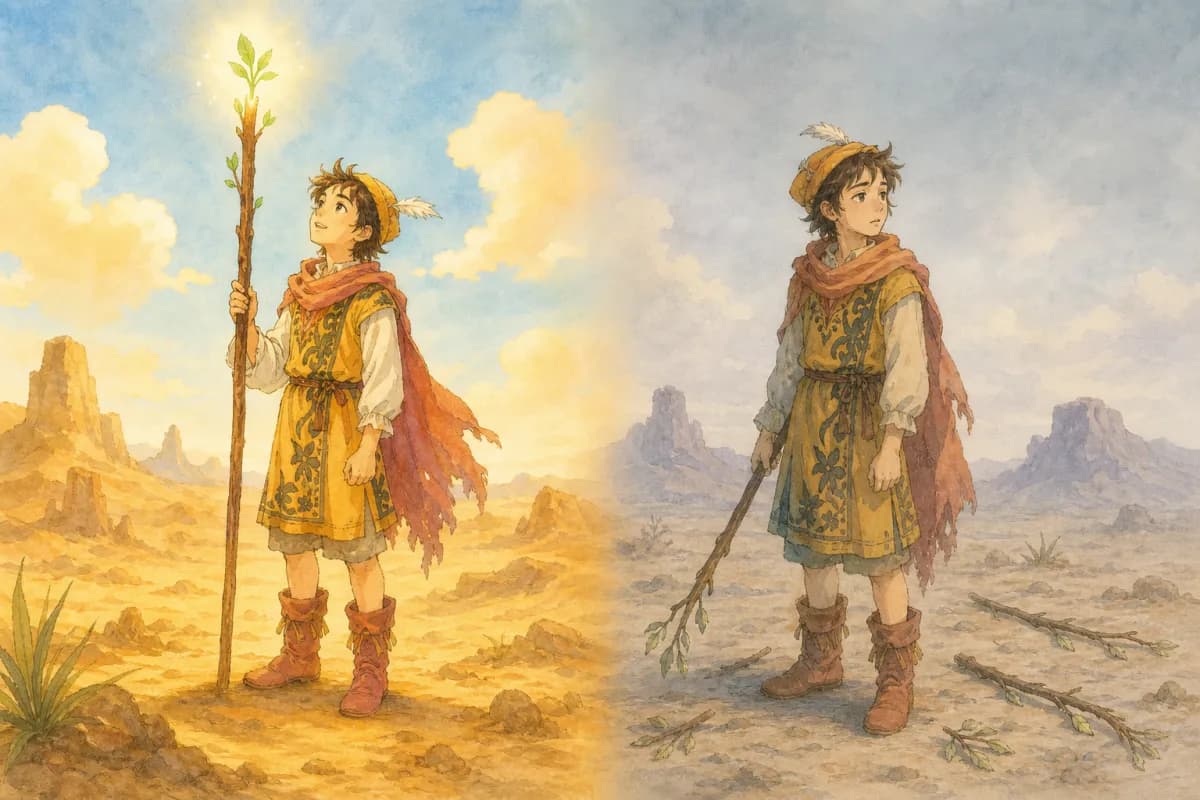
Reversed is not a bad card, and I correct clients who flinch when it turns up inverted. The enthusiasm itself is almost always genuine. Most of the time the fire is real and something has gone wrong between the spark and the doing.
The reversed Page comes in a few recognizable flavors. The first is hesitation — the idea excites you, but you keep waiting for the right moment, more research, more certainty, and the moment never feels right enough. The second is all talk and no action, the most common one I see: endless excited descriptions of the project, the trip, the business, and not one concrete step taken. The third is scattered energy — five new passions started this month, none of them past day three, the fire split so many ways no single flame catches. The fourth is the literal reading the messenger card carries inverted: bad news, a deflating reply, a plan that falls through. The fifth is creative block, the spark simply will not light, the page stays blank.
Telling these apart is the entire job. Hesitation needs courage to override it. All-talk usually breaks once you set a real deadline. Scatter asks you to put four wands down and keep the one that still pulls. Bad news wants a little grieving before you draw up a new plan, and a creative block tends to clear with rest, since forcing it rarely helps. The reversed card works like a diagnosis: it names which kind of stuck you are in, and naming it is most of the work.
Is This a Real Calling, or Just the Thrill of a Brand-New Idea?
This is the question most guides circle and never land. They warn that the Page "rushes in without thinking it through" and tell you to "ground the idea in reality." True, and useless, because they give you no way to tell a genuine calling from a passing thrill before you have already sunk three months into it. The card itself gives you the test, and it is painted on his shirt.
Go back to those salamanders with their mouths not quite reaching their tails. A finished ouroboros is a fire that feeds itself — a passion that generates its own fuel, that you would keep poking at even when no one is watching and nothing is new about it. The Page's salamanders are still open at the mouth. His fire runs on external oxygen: novelty, attention, the dopamine of a fresh start, the story he gets to tell people about the exciting new thing he is doing. That is simply the developmental stage the card depicts, with no judgment attached. It is also the exact place where a real calling and a mere thrill look completely identical, and they stay identical for about three weeks.
So here is the diagnostic I actually run with clients, built straight from the image. The thrill of a brand-new idea burns hottest at the start and cools as the novelty wears off — it is fed from outside, like the open-mouthed salamander, so it dies when the new-car smell fades. A real calling does the opposite. It survives the boring middle. It keeps pulling at you on the dull Tuesday when nobody is impressed, when the project has lost its shine, when the only audience is you. That is the ouroboros closing: the fire learning to feed itself.
You cannot tell which one you are holding on day one. You can tell by week four. The honest version of "ground it in reality" is simpler than a business plan. It means this: keep doing the thing after it stops being exciting, in private, for two or three weeks, and watch whether the fire needs the novelty to stay lit. If it cools the instant the new wears off, it was a thrill, and that is fine — thrills are how a free spirit learns its own range. If it keeps tugging when no one is looking, you found a calling, and now the pyramids on the horizon are worth walking toward.
For three years when I first started reading, I treated this card as pure encouragement — "yes, chase it." I watched too many clients chase, crash, and feel like failures when the thrill ran out. The card had only ever offered them a salamander with its circle still open, and asked them to find out for themselves whether it would close.
Career & New Ventures
This is the Page of Wands at home. In a work spread it points to the very early stage of something — a new role you are excited about, a side project, a course you want to take, a business idea that lit up in the shower. The enthusiasm is the asset. The card is telling you the interest is real and worth a small, immediate experiment.
The practical read is about sequencing. With Wands the first move is the cheap, fast, slightly embarrassing test that proves the spark is real to you before you build anything around it — the trial shift, the rough prototype, the one client. Skip the spreadsheet for now; Wands energy dies faster from over-planning. Run the calling-versus-thrill test described earlier before you quit anything or invest serious money. A Page-of-Wands business idea earns its weight by surviving a month of quiet, unglamorous tinkering. The one you described beautifully and never touched tells you very little.
A client in Daikanyama pulled this card three readings in a row about leaving her corporate job to teach pottery. By the third reading the card had become a mirror, reflecting the same fire she had been admiring, untouched, for over a year. I told her the Page had turned into a question she kept refusing to answer with her hands.
Personal Energy & Self-Discovery
Outside of work, the Page of Wands reads as a return of appetite for life — curiosity coming back online after a flat stretch, the urge to say yes to things, to learn, to wander somewhere new. For someone who has been bored or stuck, this card is the deck noticing the spark relight.
Lean into it, with one caution that mirrors the imagery: a relit spark is fragile and external-fed at first. The healthiest use of Page energy is to let it lead you toward one new thing you actually keep. Try plenty, then narrow down to the one that still pulls once the others fade. A free spirit usually finds its depth by sampling many things first.
Page of Wands Card Combinations
- Page of Wands + The Fool — double beginner's energy, pure leap-before-you-look. A genuinely exciting new chapter, and a clear signal to run the calling-versus-thrill test before betting big, because nothing here is grounded yet. Wonderful for travel and creative starts, risky for anything needing a contract.
- Page of Wands + Knight of Wands — the spark maturing into pursuit. If you have been admiring an idea, the Knight arriving is the deck saying the energy is ready to move from "I'd love to" into actual motion. Stop looking up at the wand; start walking.
- Page of Wands + The Emperor — free fire meets structure. This pairing settles scatter: the Emperor supplies discipline, turning a thrilling idea into something buildable. Read the surrounding cards to gauge whether that structure is supporting the spark or smothering it.
- Page of Wands + Three of Wands — curiosity that has started to look outward. The Three is the figure watching his ships on the horizon; paired with the Page it suggests the early exploration is finding a real direction and possibly a wider stage. The desert is starting to be crossed.
- Page of Wands + Eight of Cups — a new fire pulling you away from something emotional you have outgrown. Often a phase of leaving a stale situation to chase something that finally feels alive. Genuine, though it helps to confirm the new thing pulls you on its own merits, beyond the relief of leaving.
- Page of Wands reversed + The Tower — a deflating message or a plan collapsing right as you got excited. I read this gently: the Tower clears ground, and a Page's idea that falls apart this early usually falls apart cheaply. Better now than after the pyramid is half-built.
Numerology & Astrological Correspondences
As a Page, this card is the apprentice of its suit — the youngest face of Fire, the raw element in the hands of someone still learning to aim it, well before the Knight, King, and Queen take their turns with it. Astrologically the Wands Pages carry the fire signs in their most curious, unfocused form: Aries, Leo, and Sagittarius in the moment before any of them has chosen a direction. In Japanese タロット占い (tarō uranai, tarot divination), I read this Page through 好奇心 (kōkishin), plain curiosity, the appetite to look closer simply because something is new. What I like about 好奇心 as a frame is that it is morally neutral. It certifies only that the pull is real right now, and that following it honestly is how a person learns what they are actually drawn to.
Frequently Asked Questions
What does the Page of Wands mean in a reading?
It means curiosity, a free spirit, and a new idea or interest arriving with real enthusiasm, often alongside exciting news. It points to the very start of something — a phase of exploration where the energy is genuine and still unproven. Treat it as encouragement to follow the spark and take one small real step, and remember it stays silent on how the thing ends.
Is the Page of Wands a yes or no card?
It is a yes — an enthusiastic, lightly-held one. The card confirms there is energy and a green light to begin, and a Page marks a beginning, so it leaves the result open. Read it as a "yes, explore it" — a green light for the beginning, with the ending left genuinely open.
Is the Page of Wands reversed always negative?
No, and I would resist reading it that way. Reversed it usually means the fire is real but stuck — hesitation, all talk and no action, scattered focus, a creative block, or a piece of deflating news. The work is to identify which one, because fear and too many half-started projects each call for a different fix.
Does the Page of Wands mean good news is coming?
Often, yes. As the suit's messenger, the upright Page frequently signals incoming news, and Wands news tends to be hot and welcome — an invitation, an opportunity, an exciting yes. Reversed, the same messenger can flip to bad news or a plan falling through, so note the card's orientation.
What does the Page of Wands mean in love?
Upright, it is a fresh, playful spark — flirty attraction, curiosity, early crush energy that is genuine and very new. The pull is real; whether it deepens stays an open question. For the full relationship and feelings reading, see our companion guide on the Page of Wands as feelings.
What is the difference between the Page and the Knight of Wands?
The Page is the spark admired standing still — looking up at the wand, lit up, still in place. Let that same fire start galloping, into active pursuit, and you have the Knight. A Page's idea that you actually start chasing is, in card terms, a Page maturing into a Knight. Once you are seeing motion and momentum, you have left Page territory.
Can the Page of Wands represent an actual person?
Yes. As a court card it often describes someone bright, restless, curious, and a little rebellious — frequently younger or young at heart, easy to inspire and quick to talk about big plans. It can also describe an attitude in you rather than another person, so weigh the surrounding cards before assigning it to anyone specific.
Closing
Next time this card turns up, don't just file it under "exciting news." Pick the one idea you have been admiring without touching, and do the smallest unglamorous version of it today — the trial, the first lesson, the rough draft — then keep doing it quietly for three weeks and watch whether the fire still pulls when the novelty is gone. The salamanders on his shirt have not closed their circle yet. Whether yours does is the only part worth waiting to find out.
Follow the suit's arc into pursuit with the Knight of Wands, or see how this spark reads in matters of the heart in Page of Wands as feelings.